
What Is A Relay Relay Types How They Work
Search optical fiber, connectivity, cable management and network infrastructure references.
-
What types of protection are included in relay protection
Protective Relays: Types, Working Principle & UsesCommon protective relay types include overcurrent, ground fault, differential, distance, directional, vol.
[PDF Version]
-
What to do if a relay protection device burns out
Failure of the Coil- The relay coil can burn due to overheating, high voltage, or continuous use. The contacts need to be cleaned or. An installed relay burned out and no longer operates. Coil layer short circuit: If a voltage in excess of the coil's rating is. Relay burnout...
[PDF Version]
-
How are electromagnetic sensors classified into photoelectric types
With multiple types available—Through-beam, Diffuse-reflective, Retro-reflective, Distance-settable, and Limited-reflective—they can be selected based on the application requirements such as distance, object type, environmental conditions, and detection accuracy...
[PDF Version]
-
What are the different types of fiber optic gratings
The term type in this context refers to the underlying mechanism by which grating fringes are produced in the fiber. The different methods of creating these fringes have a significant effect on physical attributes of the produced grating, particularly the temperature response...
-
What is QK in relay protection
Electromechanical relays can be classified into several different types as follows: "Armature"-type relays have a pivoted lever supported on a hinge or knife-edge pivot, which carries a moving contact. These relays may work on either alternating or direct current, but for...
-
How often should relay protection systems be reviewed
According to ANSI/NFPA 70B, relays in industrial settings should be tested every two years. IEC and other standards dictate a maximum of three years between tests. Protection relay is the first line of defense against electrical faults. When a relay malfunctions or fails, the...
[PDF Version]
-
What are some types of diffraction-type fiber optic sensors
Among the most prominent architectures of this type are fiber Bragg gratings (FBG), and sensors based on Raman scattering [18, 19], Brillouin scattering [14, 20], and certain interferometers like Mach–Zehnder [5, 21], Sagnac, and Michelson [6, 22]. Fiber optic current sensors...
[PDF Version]
-
What are some electrical relay protection tools
Comprehensive guide to electrical protection devices including relays, fuses, and circuit breakers, with specifications, selection criteria, and applications in aerospace, military, and motorsport industries. Testing protection systems doesn't stop at the relay. You need the...
[PDF Version]
-
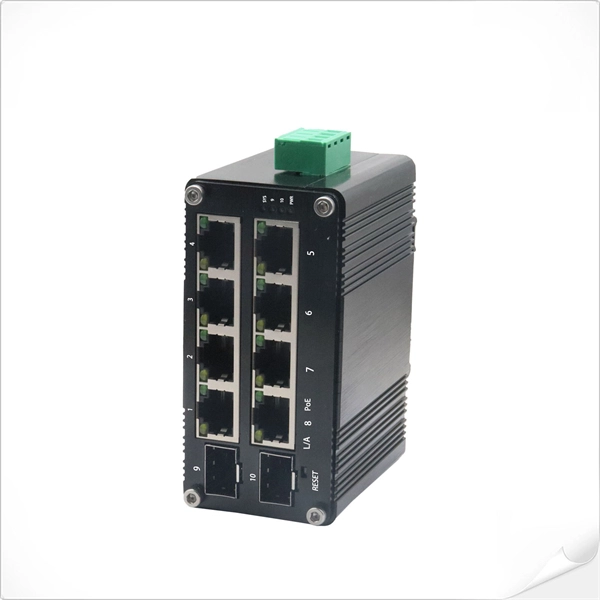
What are some types of light-emitting communication devices
Telecommunications, broadband communication using fiber-optic cables. Devices include: LEDs, photodiodes, optocouplers, and laser diodes. Converts electrical energy into light (electroluminescence). Colors: Red, green, yellow, blue, orange, white, and infrared (invisible)...
[PDF Version]