
How can one identify a broken fiber optic cable?
To identify a broken fiber optic cable, start by performing a visual inspection for any physical signs of damage, such as bends, cracks, or breaks...
Search optical fiber, connectivity, cable management and network infrastructure references.
Check for signs of corrosion or rust. Inspect for any physical damage to the enclosure. Ensure that all labels and warning signs are legible. Forget cookie-cutter checklists – we're talking about the real, practical inspection points that determine whether a distribution box...
[PDF Version]
Optical fiber consists of a and a layer, selected for due to the difference in the between the two. In practical fibers, the cladding is usually coated with a layer of or. This coating protects the fiber from damage but does not contribute to its properties. Individual coated...
Look for green or white deposits or flaking material on the connector surface. To address it, disconnect power then clean the affected area with a non-abrasive brush or cloth and apply a protective anti-corrosion coating. Some Seimens busbars are tin plated. The space under...
[PDF Version]
Standard splice plates can often provide a safe electrical path if they are UL Classified and bolted tight. However, you must use copper bonding jumpers if the tray is painted or has expansion joints for movement. A rung spacing of 6 to 9 inches (150 to 230 mm) is preferable...
[PDF Version]
Contrary to popular belief, fiber optic cables do not contain copper. Instead, they consist primarily of glass or plastic fibers that transmit data using light signals. These fibers are surrounded by protective coatings made of materials such as polymer or epoxy resin. But...
[PDF Version]
Normal WDM (sometimes called BWDM) uses the two normal wavelengths 1310 and 1550 nm on one fiber. Dense WDM (DWDM) uses the C-Band (1530 nm-1565 nm) transmission window but with denser channel. In fiber-optic communications, wavelength-division multiplexing (WDM) is a...
[PDF Version]
Fiber Optic Issues: Troubleshooting & Prevention TipsSolve common fiber optic network problems—attenuation, damage, connector issues. Learn troubleshooting.
[PDF Version]To identify a broken fiber optic cable, start by performing a visual inspection for any physical signs of damage, such as bends, cracks, or breaks...
There are several methods to test fiber optic cables without a tester. One method is using a visual fault locator (VFL), as mentioned earlier, to v...
Intermittent fiber optic connections can be caused by a variety of factors, including: Poorly terminated connectors or splices that result in unsta...
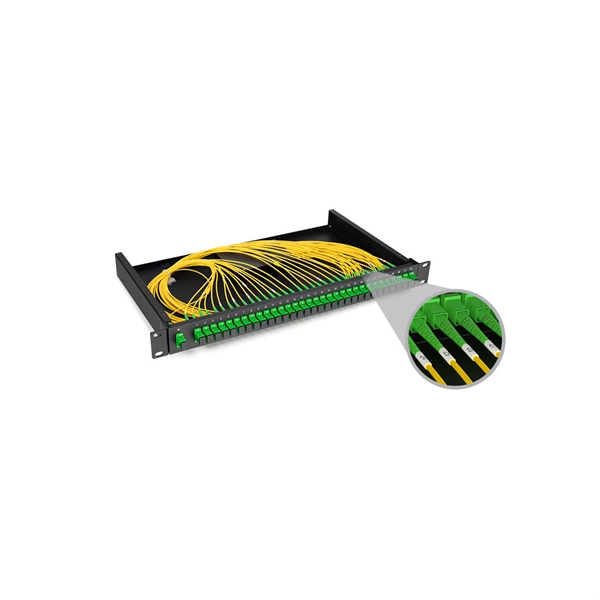
AI supercomputing servers differ significantly from traditional servers in hardware architecture, computing power, and application scenarios, which directly affect their technical implementation and business value. Let's explore the more specific differences in the following...
[PDF Version]
In this video, Ellen Bachman, District Application Engineer, explains how protective relays function as the “brains” for medium voltage breakers, ensuring faults are isolated quickly to prevent equipment damage and maintain system reliability. Long term cost reduction (TCO)...
[PDF Version]
Designing an effective layout for a plastic distribution box requires careful consideration of electrical requirements, safety standards, and practical installation needs. Safety and Reliability – Whether it's a power plant, manufacturing plant, mine, or subway system...
[PDF Version]Share the fiber interfaces, termination capacity, cable route and evidence required for handover.