
Fiber infrastructure reference
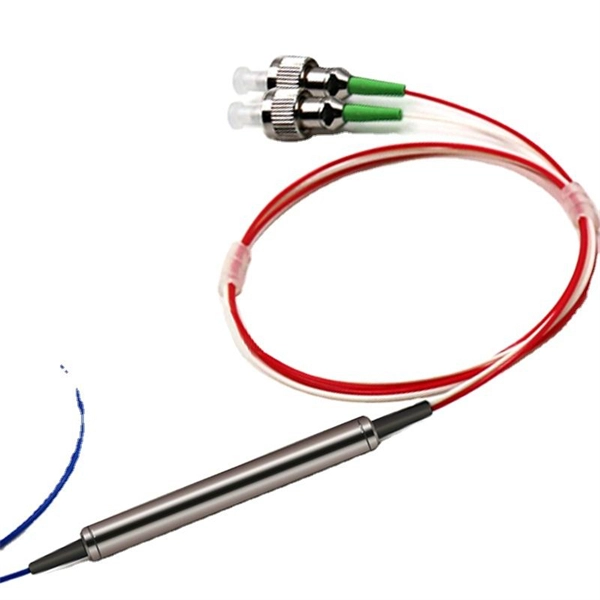
Time-Frequency Transfer over Optical Fiber
In this Review, we provide an overview of the advances in optical two-way time–frequency transfer, which began with characterizing the time–frequency transfer stability. Then, we discuss the system
High-Precision Optical Time and Frequency Transfer | NIST
Here, we present a review of approaches to high-precision optical time and frequency transfer. We first present a brief overview of the metrics used to assess time and frequency transfer.
High-Precision Optical Time and Frequency Transfer
We first present a brief overview of the metrics used to assess time and frequency transfer. We then provide a discussion of the difference between time transfer and frequency transfer and review the
Optical Time and Frequency Transfer | Springer Nature Link
They can be pure tones or hybrid spread-spectrum systems capable of transferring RF, PPS, or other signals. They need not be fiber-based, and free-space transmissions are also a matter
Compact Optical Terminal System for Two-Way Time and Frequency
In this paper, we propose an optical terminal designed for long-distance time and frequency transfer, which includes a coarse tracking module and an angle-of-arrival compensation control module.
Optical Time and Frequency Transfer
They can be pure tones or hybrid spread-spectrum systems capable of transferring RF, PPS, or other signals. They need not be fiber-based, and free-space transmissions are also a matter of active
Time-Frequency Transfer over Optical Fiber
Optical time–frequency transfer establishes the metrological linkage in large-scale clock networks, which facilitates various applications. Fiber-based transfer benefits from the abundant deploy-ment of fiber
Time and Frequency Transfer in Optical Fibers
With the increase of the need for precise time and frequency transfer over optical fibers, the time and time variations is however of outmost importance. This chapter will be a review of the published
Electromagnetic interference
Electromagnetic interference (EMI), also called radio-frequency interference (RFI) when in the radio frequency spectrum, is a disturbance generated by an external source that affects an electrical circuit
Fiber optic time and frequency transfer then and now
Fiber optic time and frequency transfer then and now Netnod Meeting 2023 Sven-Christian Ebenhag [email protected] 2023-03-15
Telecommunications media
Telecommunications media - Optical Transmission, Light Signals, Fiber Optics: Optical communication employs a beam of modulated monochromatic light to
Optical Time and Frequency Transfer
12.2 Optical Fibers: Basic Concept and Implementation The advantages of using optical fibers to perform time and frequency metrology are based on the inherent symmetry of the transmission
Electro-optic time transfer with femtosecond stability
Linear-optical-sampling (LOS) between optical frequency combs has been used to create very stable optical two-way time and frequency transfer links over free-space. Here, we demonstrate
Point-to-point stabilized optical frequency transfer with active optics
Atomic clocks and their networks are useful tools for optical communications and frequency metrology. Here the authors use phase stabilization and active tip-tilt to suppress
Fiber-optic communication
Modern fiber-optic communication systems generally include optical transmitters that convert electrical signals into optical signals, optical fiber cables to carry the
Frequency
Frequency is the number of occurrences of a repeating event per unit of time. Frequency is an important parameter used in science and engineering to specify
Optical Time and Frequency Transfer | Springer Nature Link
Fiber-optic technology is the most likely technique to achieve continuous long-distance frequency transfer adequate for comparing optical clocks, with precisions that can be in the 10 –19
The Optical Transmitter | Springer Nature Link
Digital coherent optical systems use advanced digital signal processing and modulation techniques at the transmitter and receiver. Therefore, we begin this chapter by reviewing the