
Fiber infrastructure reference
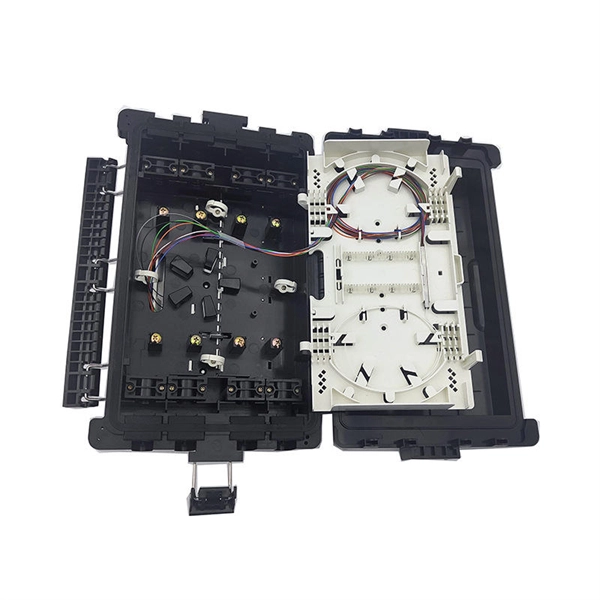
Beam Splitters – optical power splitter, beamsplitter, thin-film
Beam splitters are devices for splitting a laser beam into two or more beams. There are different types, including polarizing and non-polarizing versions.
Beam Splitters — Abridged Guide
Cube beam splitters provide equal optical path lengths for both output beams — important for interferometry. Plate beam splitters require a compensation plate in one arm to match path lengths.
What are Beamsplitters?
Beamsplitters are optical components used to split incident light at a designated ratio into two separate beams. Additionally, beamsplitters can be used in reverse to combine two different beams into a
How Do Optical Beam Splitters Work & Applications
Optical beam splitters are important components across multiple optical systems since they serve applications throughout telecommunications and scientific research. These devices split
How Beamsplitters Work: Principles and Applications
Beamsplitters are fundamental components in optical engineering, serving to precisely divide a single input beam of light into two distinct output beams. This division allows for the
Methods and applications of on-chip beam splitting: A review
The beam splitter based on MMI coupling principle is a more mainstream beam splitting method in recent years. Compared with the above y-branch splitter, it is not limited by the radiation
Physics:Beam splitter
A beam splitter or beamsplitter is an optical device that splits a beam of light into a transmitted and a reflected beam. It is a crucial part of many optical
Beam Splitter Input-Output Relations
The beam splitter has played numerous roles in many aspects of optics. For example, in quantum information the beam splitter plays essential roles in teleportation, bell measure-ments, entanglement
Chapter 19 Beam Splitter
We will study the quantum mechanical analysis of how the beam splitter behaves under different input conditions such as pairs of photons incident on the two input arms which leads to two photon
Understanding Beamsplitters: Types, Principles, and Applications
This article explores the fundamental principles and diverse applications of beamsplitters, detailing their different types and uses in fields such as optics and interferometry.
How Beam Splitters Work
Quantum Computing: In photonic quantum computing, beam splitters function as quantum gates, enabling operations on photonic qubits. For example, a 50/50 beam splitter implements a Hadamard
How Beamsplitters Work: Types, Mechanisms, and Applications
This article explains the working principles of beamsplitters, detailing how they divide a beam of light into two separate paths, the different types of beamsplitters available, and their various
What are Beamsplitters?
Beamsplitter Construction | Types of Beamsplitters Beamsplitters are optical components used to split incident light at a designated ratio into two separate beams. Additionally, beamsplitters can be used
Beam splitter
A beam splitter or beamsplitter is an optical device that splits a beam of light into a transmitted and a reflected beam. It is a crucial part of many optical experimental
Beam Splitter
The beam-splitter directs a second beam of light to the sample where it is reflected. The two beams of light return to the beam-splitter and are combined forming an image of the measured surface
How Does a Beam Splitter Work? Types, Principles & Applications
Learn how beam splitters work, compare cube and plate designs, and explore applications in lasers, microscopy, and interferometry.
Beam Splitters: Function and Types in Laser Systems
Learn about the function of a beam splitter in a laser system, the different types of beam splitters, and some common applications and challenges in optical engineering.
Beamsplitters
Beam Splitter Gratings Multiple beamsplitters, also known as array illuminators, are gratings with sophisticated periodic structure that are capable of transforming an incident plane wave into a set of
Related Video Reference
This video was associated with the source search result. Verify technical details against current product documentation and project requirements.