DOLPHIN FIBERNetwork equipment for Africa Send a project enquiry
Fiber network equipment / Technical library Optical reference library

Regulations for Optical Cable Engineering

Jump to a section
Source context

AI source overview

Optical cable engineering must comply with international standards, testing protocols, and regulatory directives to ensure performance, safety, and environmental suitability.

International Standards and Technical Requirements

Optical fibre cables must meet performance and construction criteria as defined in ITU-T L. 101, which specifies characteristics, construction, and test methods for buried and outdoor optical fibre cables. This includes adherence to IEC 60794-3-11 for duct, directly buried, and lashed aerial applications, with additional requirements for electrical continuity in metallic elements and environmental suitability.

Compliance ensures that cables maintain attenuation, mechanical strength, and durability under operational conditions. For fixed installations, optical cables must be designed, manufactured, and tested according to relevant IEC or national standards, with documentation submitted to demonstrate compliance. This includes suitability for marine environments, flexibility, and conductor specifications.

Routine tests typically include attenuation loss measurements, while type and special tests are conducted as required by the applicable standards.

Regulatory Compliance

In the European Union, optical cables must comply with CE marking under the Construction Products Regulation (CPR) and, where applicable, the Low Voltage Directive (2014/35/EU).

C

E marking indicates that the cable meets minimum safety, health, and energy efficiency standards, allowing it to be legally marketed within the EEA. Compliance also involves adherence to harmonized standards such as EN 50406-1 for high bit rate telecommunication cables and EN 50289-1-3/1-4 for electrical test methods including dielectric strength and insulation resistance.

Testing and Quality Assurance

Mandatory provisions include routine, type, and special tests to verify optical and mechanical performance. These tests ensure that cables meet attenuation, tensile strength, bending radius, and environmental resistance requirements. Manufacturers must provide test reports and maintain a quality management system to demonstrate ongoing compliance.

For cables used in critical applications, such as electric propulsion or marine environments, type approval or surveyor inspection may be required.

Installation and Environmental Considerations

Optical cables must be engineered for the specific installation environment, including buried, aerial, or duct applications. Protective casings, conduits, or trunking may be required to provide mechanical protection. Electrical and optical performance must be maintained under environmental stresses such as temperature variations, moisture, and mechanical loads.

Agreements between the manufacturer and customer may define specific installation conditions to ensure compliance with performance criteria.

Summary

Mandatory provisions for optical cable engineering encompass: Compliance with ITU-T, IEC, and national standards for design, construction, and testing. Adherence to regulatory directives such as CE marking and CPR in the EU. Execution of routine, type, and special tests to verify optical and mechanical performance.

Consideration of environmental and installation-specific requirements, including protective measures. Documentation and quality assurance to demonstrate compliance and reliability. These provisions collectively ensure that optical fibre cables are safe, reliable, and fit for their intended operational environment.

Research context

Reference summary

Implementing regulation Commission Implementing Regulation (EU) 2024/2724 of 24 October 2024 making imports of optical fibre cables originating in India su.

From reference to enquiry

Questions for your project

Use these editorial prompts alongside the linked excerpts. They identify items to confirm for your project.

Detailed reading / connection to installation

Fiber infrastructure reference
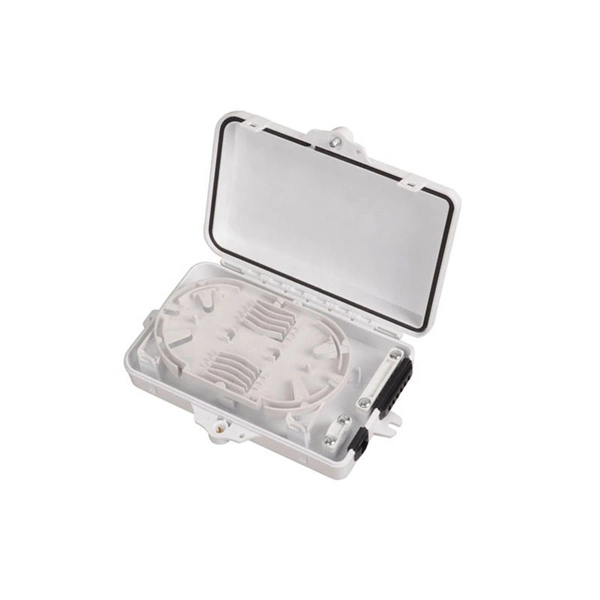
Regulations for Optical Cable Engineering
Equipment illustration / verify against the selected product
Implementing regulation

Commission Implementing Regulation (EU) 2024/2724 of 24 October 2024 making imports of optical fibre cables originating in India subject to registration C/2024/7343

Cable Regulations in the European Union: An Overview

In this guide, we explain EU compliance requirements for USB cables, power cables, optical cables, and more. Different types of cables have different characteristics and, as such, are

Fiber Optic & Cable Standards Guide | FiberMania Standards

Get a complete guide to fiber optic & related products standards—from basics to advanced, covering all key details for full understanding.

Complete List of ISO/IEC Fiber Optic Cable Standards for Importers

This standard specifies the requirements for the bare optical fiber (the hair-thin glass strand) before it is put into a cable. Why it matters: It dictates the bandwidth and attenuation (signal loss).

Handbook – Optical fibres, cables and systems

ITU-T has been active in the standardization of optical communications technology and the techniques for its optimal application within networks from the infancy of this industry. However, it is not always

Recommendation ITU-T L.101 (08/2024)

Recommended technical requirements are detailed by reference to IEC 60794-3-11 on outdoor optical fibre cables for duct, directly buried, and lashed aerial applications. Changes and

OSP Design and Standards Overview

This document provides standards and guidelines for optical fiber cable infrastructure design, deployment, and construction. It addresses standards for fiber, cable, trenches, manholes, aerial

May 2026: New Standards Released for Telecom and AV Engineering

The month of May 2026 brings a wave of significant updates in the field of telecommunications and audio/video engineering, with the publication of four new international standards. These encompass

Fiber Cable Bend Radius Engineering Limits and Guidelines

Engineering guide to cable bend radius limits, including static and dynamic requirements based on IEC, TIA, and fiber cable construction.

FIBER OPTIC CONSTRUCTION STANDARDS

Fiber optic cable sequential numbers are required at each pole location and vault wall. Sequential numbers will identify conduit length, and slack left in vaults and at poles.

Regulatory Guide: Qualification of Fiber-Optic

The U.S. Nuclear Regulatory Commission (NRC) is issuing a new Regulatory Guide (RG) 1.257, "Qualification of Fiber-Optic Cables, Connections, and Optical Fiber Splices for Use in

The Fiber Optic Association

Other groups may have fiber optic standards also: ANSI is the governing bodies for standards in the US, NIST provides primary standards, IEEE has standards for networks like Ethernet, IWCS has

Understanding Fiber Optic Cable Regulations for Legal Compliance

Fiber optic cables serve as the backbone of modern telecommunications, enabling high-speed data transmission across vast distances. Ensuring their deployment complies with the myriad

Home -The Fiber Optic Association

The FOA testing textbook focuses on the testing of fiber optic cable plants, both outside plant and premises. It covers microscope inspection of connectors and

Exploring Fiber Optic Standards and Regulations: An Inside Look

Discover the significance of fiber optic standards and regulations, including ANSI/TIA, ISO/IEC, and NEC standards, cable design, installation, and testing standards, and compliance

The FOA Reference For Fiber Optics

Fiber Optic Network Design Jump To: The Communications System Cabling Design Choosing Transmission Equipment Planning The Route Choosing Components Cable Plant Link Loss Budget

A Guide to Fiber Optic Network Planning and Design

What lies behind fiber optic network design and planning? Exploring the global market for fiber optic networks From concept to reality: 10 key steps in fiber network design and implementation

FOA Standard For Installing Fiber Optic Cable Plants

Fiber optic cables may contain multimode optical fibers, singlemode fibers or a combination of the two, in which case it is generally referred to as a “hybrid” cable.

Specify your fiber equipment

Share the fiber interfaces, termination capacity, cable route and evidence required for handover.

Send a project brief