DOLPHIN FIBERNetwork equipment for Africa Send a project enquiry
Fiber network equipment / Technical library Optical reference library

Testing and Determining the Functionality of Optical Couplers

Jump to a section
Source context

AI source overview

Optical couplers are tested using visual inspection, insertion loss, return loss, and high-throughput or wafer-scale techniques to ensure signal quality and reliability.

Visual Inspection

A fundamental step in testing optical couplers is visual inspection. This involves examining the coupler and fiber adapter for scratches, cracks, contamination, or misalignment. Tools such as fiber inspection microscopes or video fiber inspection probes are used to inspect connector end faces, ensuring they are clean and properly aligned, which is critical for minimizing signal loss and maintaining network performance.

Insertion Loss Measurement

Insertion loss quantifies the signal power lost when light passes through a coupler. It is measured by comparing the optical power before and after the coupler using an optical power meter and a stable light source. Low insertion loss indicates a high-quality coupler, while excessive loss may signal defects or misalignment.

For passive fiber networks, standards like OFSTP-14 (double-ended loss) and FOTP-171 (single-ended testing) are commonly applied.

Return Loss Measurement

Return loss measures the amount of light reflected back toward the source due to imperfections or mismatches in the coupler. High return loss is desirable as it indicates minimal reflection and better signal integrity. Instruments such as optical time-domain reflectometers (OTDRs) or optical spectrum analyzers (OSAs) are used to quantify return loss, ensuring compliance with performance standards.

High-

Throughput and Wafer-Scale TestingFor silicon photonics and high-density couplers, wafer-scale testing techniques are employed. These methods use edge couplers or grating couplers to couple light efficiently into multiple devices simultaneously, enabling inline process monitoring and reducing production costs. Techniques like quasi-planar coupling with planar lightwave circuits (PLCs) allow vertical light insertion into dicing channels, facilitating rapid testing of hundreds of devices per wafer while maintaining low excess loss and polarization-dependent loss.

Coupling Efficiency in Spectroscopic and Specialized Systems

In spectroscopic instruments, testing focuses on coupling efficiency, which depends on alignment, mode matching, surface quality, and connector design. Direct coupling, lens-assisted focusing, and precise fiber alignment are used to maximize light transmission into the fiber core. Misalignment, contamination, or poor polishing can significantly reduce efficiency, especially in single-mode fibers with small cores.

Optocoupler Testing for Electrical Isolation

For optoelectronic couplers (optocouplers), testing includes evaluating current transfer ratios, high-bandwidth signal isolation, and radiation tolerance for space or high-reliability applications. Ground testing protocols assess performance under Total Ionizing Dose (TID), Displacement Damage Dose (DDD), and Single Event Effects (SEEs). The tests involve measuring the optical signal from the LED emitter to the photodetector and amplifier, ensuring the device maintains isolation and signal integrity under expected operating conditions.

Summary

Testing optical couplers involves a combination of visual inspection, insertion loss, return loss, high-throughput wafer-scale testing, and application-specific evaluations. The choice of method depends on the coupler type, network requirements, and operational environment, ensuring reliable performance in both standard fiber optic networks and specialized photonic or optoelectronic systems.

Research context

Reference summary

A Review of Optical Coupler Theory, Techniques, and ApplicationsThe objective of this paper is to provide a review of the theory, techniques, and applicati.

From reference to enquiry

Questions for your project

Use these editorial prompts alongside the linked excerpts. They identify items to confirm for your project.

Detailed reading / connection to installation

Fiber infrastructure reference
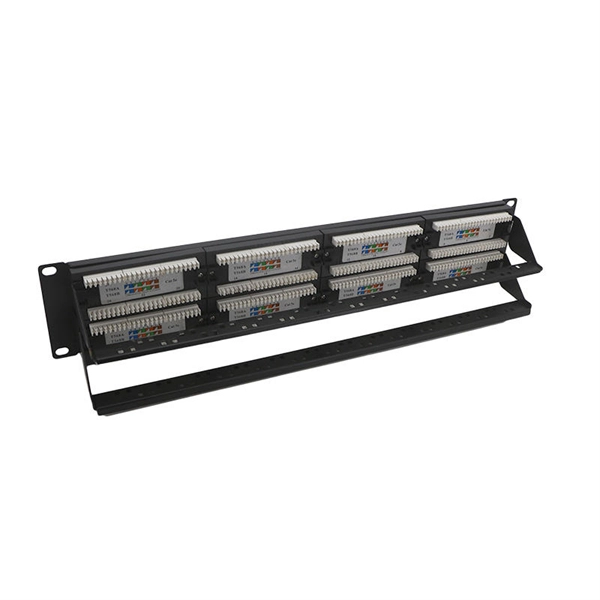
Testing and Determining the Functionality of Optical Couplers
Equipment illustration / verify against the selected product
A Review of Optical Coupler Theory, Techniques, and Applications

The objective of this paper is to provide a review of the theory, techniques, and applications of optical couplers.

Optical coupler testing method and system

The present disclosure provides an optocoupler testing method and system, and relates to the field of electronic technology.

Reliability Modelling of Optical Fiber Couplers Based on Accelerated

Abstract: This paper introduces a methodology designed to predict the reliability of optoelectronic devices through accelerated testing. To imitate an industrial silicon photonics chip, we

The FOA Reference For Fiber Optics

Testing a splitter or other passive fiber optic devices like switches is little different from testing a patchcord or cable plant using the two industry standard tests, OFSTP-14 for double-ended loss

Optical Coupler

Optical coupler is a semiconductor device, which is designed to transfer electrical signals by using light waves in order to provide coupling with electrical isolation between circuits or systems.

Optical Fiber Coupling

Optical fiber coupling has drawn researchers'' attention due to its compact structure that enables it applied in narrow space, real time detection, and even in-situ measurement in vivo. For standard

Combination test Expanded test method for optocouplers

Optocouplers must be tested for compliance with specified parameter values by means of function as well as in-circuit tests. A basic characteristic of an optocoupler is DC isolation between its input and

How to Check Optocoupler with Multimeter? – A Simple Guide

Understanding how to accurately test and verify the proper functionality of an optocoupler is essential for technicians and hobbyists alike.

Optical Coupling Efficiency of a Coupler with Double-Combined

The optical coupling performance of the coupler was analyzed by investigating the structural characteristics of DCLs, the coupling mechanism, the TECF properties, and the coupling

How To Make an Optocoupler Tester Circuit At Home

Optocoupler testers are used to check the functionality of any optocoupler receiver. It is a simple, useful & inexpensive circuit that helps you in determining the functional health of an

A Review of Optical Coupler Theory, Techniques, and Applications

optical couplers. Coupling at optical frequencies presents challenges to achieving high efficiency, compactness, high fabrication tolerance, and ease of integration in photonic integrated

Demystifying Fiber Test Methods – Back to Basics

Demystifying Fiber Test Methods – Back to Basics Fiber Optic Cable Testing Methods Fiber optic networks are the backbone of modern telecommunications, providing high-speed data transmission

Fiber Optic System Testing Tutorial

The passive fiber optic link may include the following components: 1) fiber optic cable, 2) fiber optic connectors, 3) fiber optic adapters, 4) fiber optic splices and 5) fiber optic “hardware” (housings and

Testing Strategies for Next-Generation Optical Interconnects: Co

W H I T E P A P E R This paper discusses industry trends in Integrated Photonics and how market participants are adapting to test and mass produce next-generation optical interconnects in a cost

How to test the quality of the coupler and optical fiber adapter

Testing the quality of couplers and optical fiber adapters is crucial to ensure reliable and efficient connections in fiber optic networks. Here are some methods commonly used to test the

Locally Erasable Couplers for Optical Device Testing in Silicon on

Wafer scale testing is critical to reducing production costs and increasing production yield. Here we report a method that allows testing of individual optical components within a complex

Understanding 3dB Couplers in Optical Communication

Optical testing techniques play a pivotal role in how engineers assess the performance of 3dB couplers. These methods, which include using laser sources

Repeatability of Automated Edge Coupling for Wafer Level Testing

In foundries environment the optical characterization of Photonic Integrated Circuits (PICs) for process control and device performance verification requires a high throughput test

Related Video Reference

This video was associated with the source search result. Verify technical details against current product documentation and project requirements.

Specify your fiber equipment

Share the fiber interfaces, termination capacity, cable route and evidence required for handover.

Send a project brief