
Fiber infrastructure reference
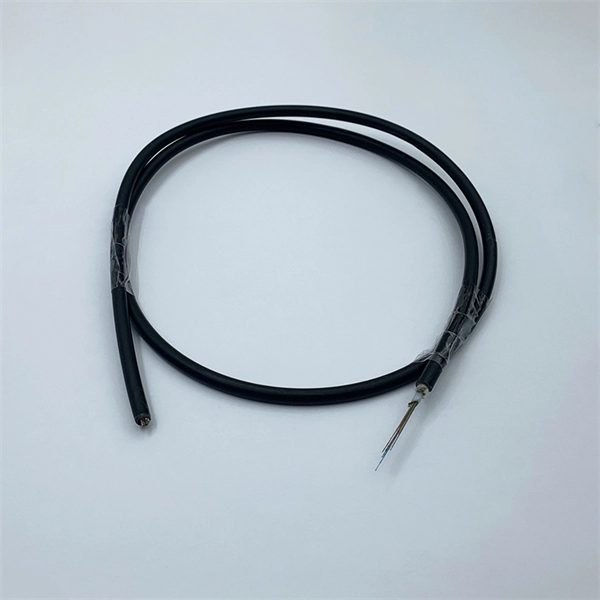
Fiber Coupler
They can operate bidirectionally and their function can be active or passive depending on the strength of the input signal propagating through it. They find potential applications in multiplexing devices,
How a Fiber Coupler Works: From Physics to Manufacturing
A fiber coupler is a passive optical device that manages the flow of light signals within an optical network. It functions by dividing a single incoming light path into multiple outgoing paths, or by
Fiber Optic Couplers | How it works, Application
At a fundamental level, a fiber optic coupler is a device that distributes or combines optical signals (light) between two or more optical fibers.
Tutorial Passive Fiber Optics, Part 8: Fiber Couplers and Splitters
Dichroic couplers can be used to combine a pump and a signal input for a fiber amplifier, or to remove residual pump light after the amplifier. For high-power fiber lasers and amplifiers, one often needs
What Is Fiber Optic Coupler and How Does It Work?
Fiber optic coupler is one type of fiber optic component that allows for the redistribution of optical signals. It covers a wide range of fiber optic devices such as optical splitters, optical
What is a Fiber Coupler and How Does It Work?
In summary, a Fiber Coupler is a vital optical component in fiber optic systems, enabling the transfer of light signals between different fibers or from free space into a fiber. Its precise
Fiber Couplers – optical fiber
A fiber coupler is an optical fiber device that connects multiple fibers, allowing light from an input fiber to be distributed to one or more output fibers. The term can also refer to a fiber launch system for
Fiber Coupler Tutorials
Insertion loss (in dB) is the ratio of the input power to the output power from each leg of the coupler as a function of wavelength. It captures both the coupling ratio and the excess loss. The coupling ratio is
Fiber Coupler
A fiber coupler is defined as a device that enables the coupling of light between two single-mode fibers, achieved by bringing their cores close enough to allow optical modes to overlap,
The role and working principle of fiber optic couplers
Optical fiber coupler is a device for detachable (active) connection between optical fiber and optical fiber. It precisely butts the two end faces of
Network Fibre Optics: How Modern Optical Networks Work
Introduction to Network Fibre Optics Network fibre optics forms the backbone of modern internet, cloud computing, and telecommunications infrastructure across the UK and globally. Since
Fiber Optic Couplers Information
Fiber optic couplers are optical devices that connect three or more fiber ends, dividing one input between two or more outputs, or combining two or more inputs into one output. The device allows
Fiber Optic Coupler: A Beginner''s Guide
In this article, you will learn about the meaning, function, classification, and in which scenarios fiber optic coupler is needed
What Is Fiber Optic Coupler and How Does It Work?
Fiber optic couplers are used to split or combine optical signals in optical fiber systems. It contains various types like optical splitters, optical combiners and optical couplers. This tutorial
Fiber Couplers – optical fiber
Fiber couplers are fiber devices for coupling light from one or several input fibers to one or several output fibers, or from free space into a fiber.
Comprehensive Guide to Fiber Optic Couplers and
Couplers and adapters used within the isolating structure allow the connection of different types of optical fibers while ensuring that the loss of the
Optocoupler Basics: Definition, Types, and Features
/ Fiber Optic / Optocoupler Basics: Definition, Types, and Features Optocoupler Basics: Definition, Types, and Features An optocoupler is a coupling device used to couple optical signals. It''s primarily
What is a Fiber Coupler and How Does It Work?
A Fiber Coupler, also known as a fiber optic coupler, is a crucial optical device used in fiber optic systems. It functions to couple light from one or
Related Video Reference
This video was associated with the source search result. Verify technical details against current product documentation and project requirements.