
Fiber infrastructure reference
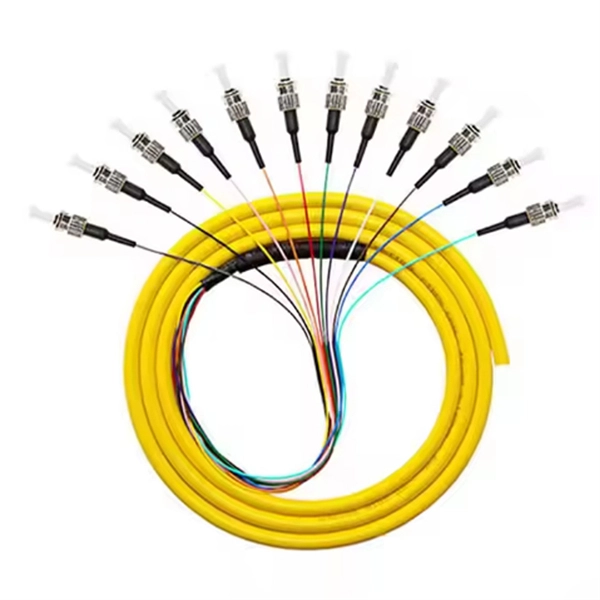
Everything you need to know about fiber optic termination
We terminate fiber optic cable two ways - with connectors that can mate two fibers to create a temporary joint and/or connect the fiber to a piece of network gear or
Fiber Optic Polarity 101: A-B Polarity
For backbone and riser multifiber cable, installers should always follow the color code and numbering system below for A-B polarity, as defined in TIA-598-C
Fiber Polarity Basics | Fluke Networks
Since most fiber optic links use two fibers transmitting in opposite directions to create a full duplex link, you need to ensure that transmitters are connected to receivers and vice versa.
Fiber Optic Troubleshooting: Expert Guide for Common Issues
Troubleshoot fiber optic issues like a pro with our expert guide. Resolve common problems and ensure seamless connectivity.
Fiber Optic Cable Installation, Overhead vs. Buried Laying
Overhead and buried laying are the most common laying methods for fiber optic cable installation. What are their differences and which one is the best when comes to setting an optical
Mastering Fiber Polarity: 6 Rules for Reliable Optical Networks
The fiber positions in a Type B cable are reversed between the two ends. To maintain a proper signal, standard A-to-B duplex patch cables are employed on both sides of the link.
Handbook Optical fibres, cables and systems
A PON can be deployed in a FTTH (fibre to the home) architecture or in a FTTB (fibre to the building), a FTTC (fibre to the curb) or a FTTCab (fibre to the cabinet) architecture, depending on local demands.
Fiber Optic Cable Installation and Handling Instructions
The information contained in this manual should serve as a guide to proper handling, installing, testing, and for troubleshooting problems with fiber optic cables.
Submarine communications cable
A cross section of the shore-end of a modern submarine communications cable. 1 – Polyethylene 2 – Mylar tape 3 – Stranded steel wires 4 – Aluminium water barrier 5 – Polycarbonate 6 – Copper or
Fiber optics | Definition, Inventors, & Facts | Britannica
Fiber optics, the science of transmitting data, voice, and images by the passage of light through thin, transparent fibers. In telecommunications, fiber
Fiber Polarity Basics | Fluke Networks
Fiber polarity is the direction that light signals travel from one end of a fiber optic cable (link) to the other. A link''s transmit signal (Tx) must match its
Fiber optics in military communications: the dawn of a new era.
Birth of the Fiber Optic Cable Two approaches were initially pursued for the development of a practical waveguide. The first was the use of gas-filled tubes in which temperature was
Fiber Polarity: Everything you Need to Know
A fiber-optic link can function only if Tx on one end is connected to Rx on the other, and vice versa; this is accomplished by creating a fiber polarity flip that swaps Tx for Rx at some point in
Fiber Polarity Technical White Paper | FS
Understanding Fiber Polarity 1. What''s Polarity? In any installation, it is important to ensure that the optical transmitter at one end is connected to the optical receiver at the other. This matching of the
Fiber Optic Polarity 101: A-B Polarity
Adapter Plate to Adapter Plate For backbone and riser multifiber cable, installers should always follow the color code and numbering system below for A-B
Optical networks
An optical transport network is a high-speed communication system that sends light signals over fiber-optic cables to move large amounts of data across long
101 Guidelines for Fiber Optic Cable Installation
Never directly pull on the fiber itself. Fiber optic cables have Kevlar aramid yarn or a fiberglass rod as their strength member. You should pull on the fiber cable strength members only! Never exceed the
Displayport 2.1 Fibre Optic Cable 1 m, DP 2.1 Cable [16K30Hz
Fibre Optic DisplayPort Cable 2.1: This DisplayPort 2.1 is a fibre optic version. Compared to copper cables on the market, fiber optic can transmit over long distances without losses. It is also resistant
Related Video Reference
This video was associated with the source search result. Verify technical details against current product documentation and project requirements.