
Advanced Technologies For Next Generation Passive Optical Networks
Search optical fiber, connectivity, cable management and network infrastructure references.
-
BESS energy storage system with low loss is used in wind power generation
Integrating a Battery Electric Energy Storage System (BESS) in wind generation can smooth the power injection at the Common Coupling Point (PCC), contributing to the power system voltage and frequency stability. The energy is stored in chemical form and converted into...
[PDF Version]
-
Construction Principle of Passive Beam Splitter
In its most common form, a cube, a beam splitter is made from two triangular glass prisms which are glued together at their base using polyester, epoxy, or urethane-based adhesives. (Before these synthetic resins, natural ones were used, e.g. Canada balsam.) The thickness of...
[PDF Version]
-
Airport-grade Passive Optical Network QSFP-DD Selection Guide
This guide explains how to choose QSFP-DD transceivers step by step, helping you avoid costly mistakes and ensure compatibility across your network. Cisco QSFP-DD and OSFP 800G ZR/ZR+ digital coherent optics modules enable 800G traffic over amplified Dense Wavelength-Division...
[PDF Version]
-
Important Technologies in Optical Fiber Communication
In 1880, and his assistant created a very early precursor to fiber-optic communications, the, at Bell's newly established in. Bell considered it his most important invention. The device allowed for the of sound on a beam of light. On June 3, 1880, Bell conducted the world's...
-

Ethernet Passive Optical Networking Optical Light
Abstract— We introduce optical local-area network (LAN) architectures based on multimode optical fiber and components, short wavelength lasers and detectors, and the widely used fast Ethernet protocol. While there are many subtle differences, a clear distinction between...
[PDF Version]
-
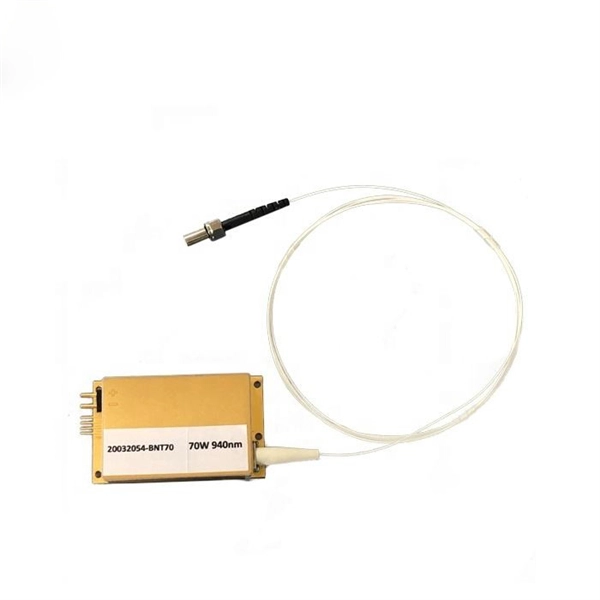
Next-Generation Passive Optical Network Phase
Key Finding: Passive Optical Networks have evolved from first-generation GPON systems delivering 2. 5 Gbps to cutting-edge 50G-PON implementations in 2025, with 100G Coherent PON (CPON) technologies emerging as the next frontier for ultra-high-speed broadband delivery. In...
[PDF Version]
-
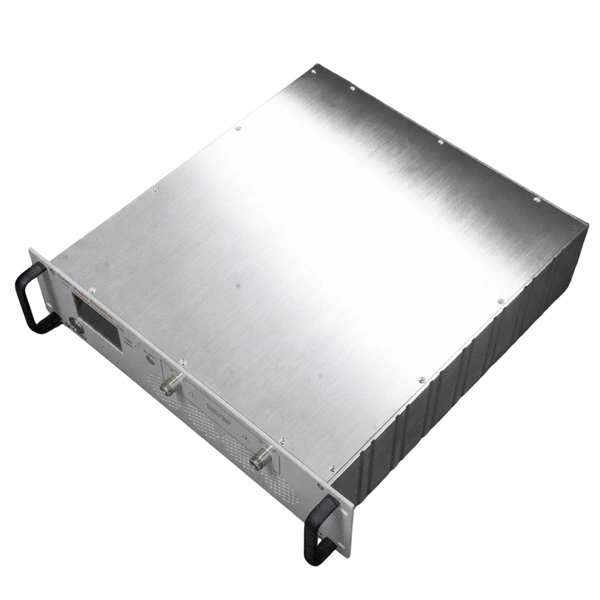
Key Technologies of Wavelength Division Multiplexers
Normal WDM (sometimes called BWDM) uses the two normal wavelengths 1310 and 1550 nm on one fiber. Dense WDM (DWDM) uses the C-Band (1530 nm-1565 nm) transmission window but with denser channel. In fiber-optic communications, wavelength-division multiplexing (WDM) is a...
[PDF Version]
-
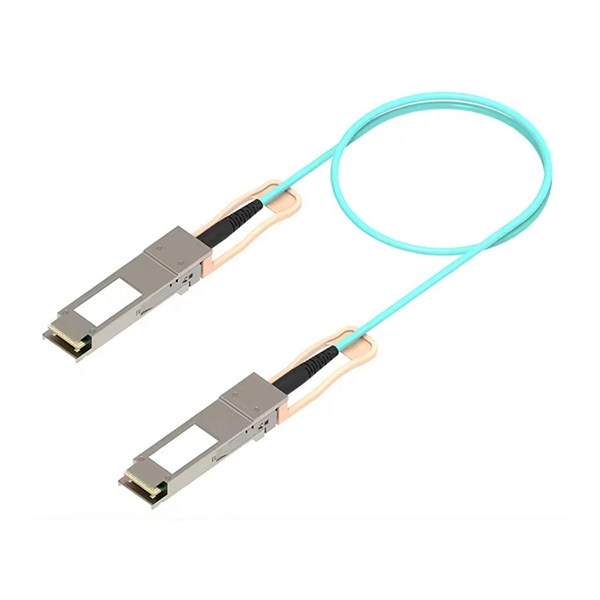
Passive wavelength division multiplexers require a power supply
Passive DWDM systems consume very little power and do not require an external power source, making them suitable for energy-efficient and green deployments. They are cost-effective in terms of deployment and maintenance, which is ideal for projects with limited budgets...
[PDF Version]
More from the technical library
- Fiber Optic Cable Junction Box Replacement
- A Collection of Couplets Related to Optical Fiber Cable Lines
- How to distinguish between fiber optic cables
- African KJ660 Relay Protection Tester
- Should patch cords be made of fiber optic or Ethernet cable
- Energy-efficient optical circulators for security applications
- China s No 1 Optical Module Manufacturer