
Fiber infrastructure reference
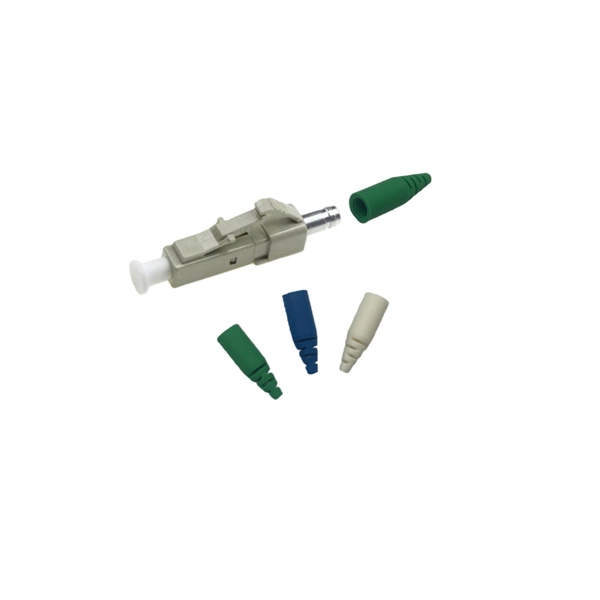
Optical Fibre Attenuation IEC 61300 | Fiber Products
The difference lies in line attenuation: multi-mode fibres have significantly higher attenuation at 3.5 dB/km at 850 nm compared to single-mode at 0.35 dB/km at 1310 nm.
The FOA Reference For Fiber Optics
For multimode fiber, an OLTS using a LED source will usually measure over a range of 0-30 dB, more than adequate for most multimode cable plants which are under 10 dB loss.
Fibre Optic Cabling Loss Limits Explained – Trend Networks
For multimode fibre, a reading of less than 3.0 dB/km at 850nm is considered good. For single-mode fibre, a reading of less than 0.5 dB/km at 1310nm or 1550nm is ideal.
The FOA Reference For Fiber Optics
In order to test multimode fiber optic cables accurately and reproducibly, it is necessary to understand modal distribution, mode control and attenuation correction factors.
Introduction to Optical Fibers, dB, Attenuation and Measurements
This document is a quick reference to some of the formulas and important information related to optical technologies. This document focuses on decibels (dB), decibels per milliwatt (dBm),
What is a normal attenuation level in dB for OM3 multimode optical fiber
OM3 Attenuation: The attenuation for OM3 at 850 nm is approximately 3.5 dB/km. While this is acceptable for shorter distances, the higher the attenuation, the greater the potential for signal
What Is Acceptable dB Loss for Fiber Optics?
High-quality reference-grade connectors mated together can achieve 0.10 dB or less on multimode and 0.20 dB or less on singlemode. In practice, most installers budget 0.50 dB per
The Best DB for Optical Fiber
The best dB/km value for single-mode fiber is typically around 0.2 dB/km. Multi-mode fiber has a higher attenuation rate, with the best dB/km value being around 3 dB/km.
Optical Fiber Attenuation Interactive Calculator | FIRGELLI
At 850 nm, typical multimode fiber attenuation reaches 2.5 dB/km, while at 1310 nm it drops to 0.35 dB/km, and at 1550 nm achieves the theoretical minimum near 0.20 dB/km for standard
Fiber Optic Attenuation Calculator | Fiberopticx
This calculator helps you estimate the total attenuation (signal loss) in a fiber optic cable link. Here are the details and instructions about each field and how they contribute to the calculation:
Multimode Fibers – optical glass fiber, large-core fibers,
Multimode fibers are fibers supporting more than one guided mode per polarization direction – in some cases even a large number of modes.
Fiber Optic Cable Testing 101: Tools, Techniques, and Industry
To ensure your fiber optic link meets these standards, compare your test results against the calculated link attenuation allowance using this formula: Link Attenuation Allowance (dB) = Cable
Fiber Testing Standards 2025 Guide for IEC and TIA
Attenuation This is the total signal loss over the fiber length. IEC 61280-4 and TIA-568.3-D set the maximum allowable attenuation for each fiber
1G SFP Modules: A Deep Dive into Specs & Types
Learn how to choose and optimize 1G SFP modules. Compare specs, fiber vs copper types, troubleshooting tips, and best practices for reliable networks.
Optical Fiber Loss and Attenuation | MEETOPTICS Academy
Fiber loss, also called fiber optic attenuation or attenuation loss, refers to the loss of signal between input and output. Losses can be introduced by various means such as intrinsic material absorption,
Calculate the Maximum Attenuation for Optical Fiber Links
Introduction This document describes how to calculate the maximum attenuation for an optical fiber. You can apply this methodology to all types of optical fibers in order to estimate the
Fiber Optics Technician | Hello, let''s see who can identify
Fiber optic cables are designed to minimize attenuation, with high-quality fibers achieving remarkably low levels of attenuation. 📊 Attenuation is commonly measured in decibels per kilometer (dB/km),
Single-Mode Optical Fiber
Single-mode and multimode optical fibers: (a) comparison between light distribution inside the optical fiber for modes LP01 (fundamental) and LP21 in a fiber ; (b) diagrammatical comparison between
Related Video Reference
This video was associated with the source search result. Verify technical details against current product documentation and project requirements.