
Fiber infrastructure reference
Understanding Signal Attenuation in Fiber Optics and How to Manage It
Optical Signal Attenuation is the single greatest factor limiting the distance and performance of your network. Understanding it is crucial for anyone involved in data centers,
What Are Acceptable Fiber Light Levels?
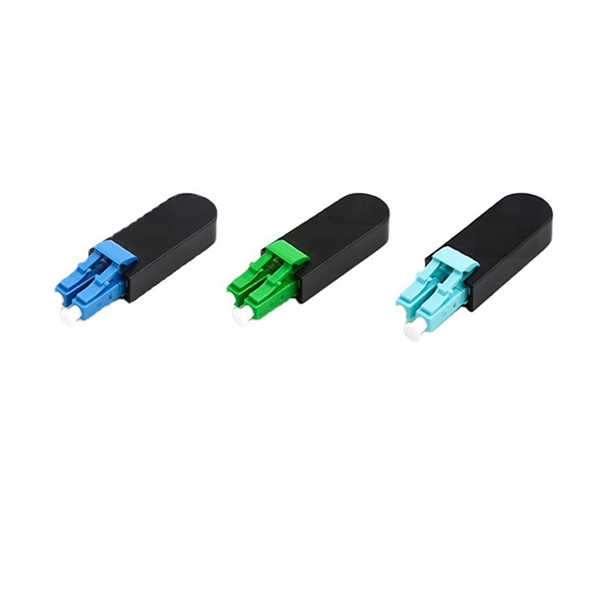
When the signal is too strong, engineers must install a passive optical attenuator to intentionally reduce the light level and bring it within the acceptable operating window for reliable
What Is Attenuation in Fiber Optics and How Is It Measured?
Attenuation causes light to weaken as it travels through fiber optic cables. Learn why it happens, what affects it, and how engineers measure and manage it.
Signal Attenuation in Long-Distance Optical Modules: A Complete Guide
Description: Learn why attenuation in long-distance optical modules is essential for preventing signal overload, reducing nonlinear interference, adapting to various distances, and
Why Does Long-distance Optical Module Need Attenuation?
Attenuation can reduce the power of optical signals in optical fibers, thereby reducing the probability and impact of nonlinear effects. This helps maintain signal integrity, reduce interference
What Causes Attenuation in Optical Fiber?
Learn how inherent material properties and external factors like bending cause measurable signal loss (attenuation) in optical fiber networks.
Attenuation in Optical Fibers: A Comprehensive Guide
Use low-OH⁻ fibers (e.g., SMF-28 Ultra) for 1380 nm avoidance. Specify bend-insensitive fibers (G.657) for tight installations.
Measuring the Attenuation in Optical Fiber
Medical equipment uses fiber optics to illuminate and observe inside the body and in some cases to send high-energy laser pulses through the fiber to perform internal surgery.
Understanding Attenuation in Optical Fibers and Its Impact on Light
However, optical fibers were initially ruled out as a practical medium due to high levels of attenuation, which meant that light signals would degrade over long distances, making long-distance
Troubleshooting Guidelines for Optical Modules
Remove and reinstall the optical module. If the fault persists, replace the optical module with a normal one of the same type to check whether the optical module is faulty. If the fault persists,
What Is an Optical Module and Its FAQs (V200)
What Is an Optical Module and Its FAQs (V200) Describes what an optical module is and FAQs, including the fundamentals, appearance and structure, key performance counters, common types,
The Ultimate Guide to SFP Modules (2026): Types,
Confused by SFP vs SFP+? Read the definitive 2026 guide on SFP modules. We explain Single Mode vs Multimode, DDM diagnostics, and how to choose the
The Rise of Co-Packaged Optics (CPO) and Silicon Photonics in
📺 What is Co Packaged Optics? Architectural Comparison of LPO and CPO Systems Engineering Challenges: Silicon Photonics and Laser Integration The foundation of CPO is Silicon
Cisco Command to Check SFP Module Details
Learn Cisco commands like show inventory and show interface transceiver detail to monitor SFP modules, DDM metrics, and compatibility.
The FOA Reference For Fiber Optics
Optical power, required for measuring source power, receiver power and, when used with a test source, loss or attenuation, is the most important parameter and is required for almost every fiber optic test.
OTDR Fiber Optic Cable Tester Explained
*OTDR stands for Optical Time-Domain Reflectometer.* It is a special test device used in fiber optic networks to check the condition and quality of optical cables. *What Does an OTDR Do?* An OTDR
Single & Multimode Fiber Optic Cable: What''s the
On the other hand, multiple light rays propagate through the waveguide at the same time in multimode optical fiber. Single-mode fiber also
The FOA Reference For Fiber Optics
Remember you can''t see this light either because it is in the infrared wavelengths beyond the sensitivity of the human eye. Read more on optical power measurements. Understanding dB In the very early
Related Video Reference
This video was associated with the source search result. Verify technical details against current product documentation and project requirements.