
Fiber infrastructure reference
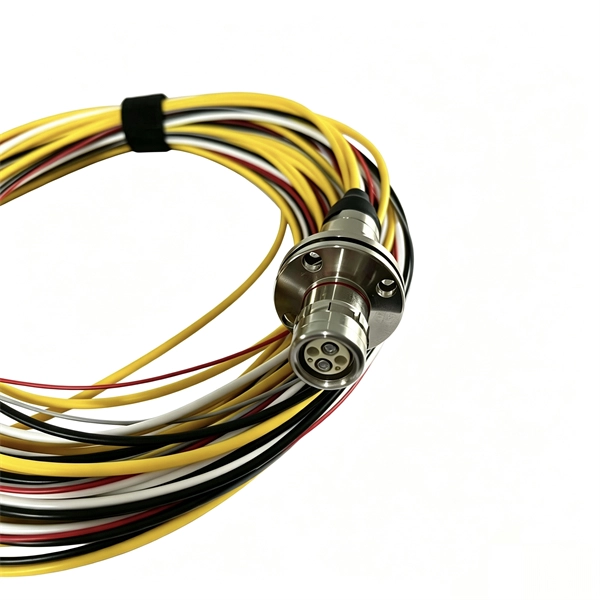
What is a Fiber Ring & its Advantages
Fiber rings refer to configurations or architectures used in fiber optic networks, often employed in telecommunications to ensure high-speed data transmission with
Fiber Rings Explained: What They Are and Why They
A fiber ring, also known as a fiber optic ring network, is a specialized network topology where fiber optic cables are connected in the shape of a closed
What Is a Fiber Ring and How Does It Work?
The physical layout of a fiber ring is a closed-loop topology where every network device, known as a node, is connected to exactly two other nodes. Data is transmitted across this fiber using
Fiber Optic Ring Redundancy Design for Industrial Ethernet Switches
The workshop deploys two independent fiber optic ring networks (Ring A and Ring B), each containing eight USR-ISG-8G industrial switches interconnected over 10 kilometers using 10G single-mode
Fiber Optic Network Topologies for ITS and Other Systems
Networks can be configured in a number of topologies. These include a bus, with or without a backbone, a star network, a ring network, which can be redundant and/or self-healing, or some combination of
Using a fibre ring topology to ensure resilience in the
Network reliability and robustness are critical factors for any organization in the digital age. One approach that has proven effective in achieving these goals is
Fiber Ring 2026
A fiber ring is a network topology that connects multiple locations in a circular configuration using fiber optic cables, creating a self-healing communications loop. This architecture provides redundant
Network Redundancy and Ring Topologies
First, let''s start with a general overview of ring topology within a redundant fiber optic network. A ring topology is a network configuration where each networked device is connected to two other devices
FIBER RING NETWORKS
Although a broadcast fiber network is usually thought of as having a star topology, it is also possible to build a broadcast network as a ring. This configuration has the
What is token ring and how does it work?
When a device on the network successfully decodes that token, it receives the encoded data. Token ring history Attached Resource Computer
Fiber ring topology provides both distance and resilience
Fiber ring topology provides both distance and resilience Posted on May 22, 2012 by Meghan Damico Although Ethernet is usually thought of as having a star topology, it''s also possible
Ring network
A ring network is a network topology in which each node connects to exactly two other nodes, forming a single continuous pathway for signals through each node
What is SFP Port? Everything You Need to Know
What is an SFP port? The SFP port also refers to a Small Form-factor Pluggable port. It is a compact mechanical slot that accepts an SFP
# of SFP ports needed for campus Ethernet Ring??
Each node one the ring will require 2 optical transceivers (typically SFP, GBIC, etc.). Each transceiver requires 2 fibers (one for transmit port and one for receive port).
Ring Topology: How It Works, Types & Real Network
Understanding how ring compares to other network topologies helps in network design: Ring topology offers predictable flow, good for metro fiber or
TC2800 Multi-Drop Fiber Optic Multiplexer with Self
The TC2800 RS232/422/485 Multi-Drop Fiber Optic Multiplexer is designed for Ring & Self-Healing Ring topologies in SCADA, Transportation & Process Control
A Fiber Optic Ring Network
An optical fiber cable distribution architecture and a ring interface are described. The unique synergism of the ring configuration coupled with a widespread optical fiber cable facility are explored. The ring
Self-healing ring
Self-healing rings offer high levels of resilience at low cost, since it is often geographically easy to take multiple paths across the landscape and link them
Related Video Reference
This video was associated with the source search result. Verify technical details against current product documentation and project requirements.