DOLPHIN FIBERNetwork equipment for Africa Send a project enquiry
Fiber network equipment / Technical library Optical reference library

Relay Protection for Generators and Transformers

Jump to a section
Source context

AI source overview

Generator and transformer relay protection ensures safe operation by detecting electrical, mechanical, and thermal faults, isolating the equipment, and preventing damage.

Generator Protection

Purpose: Generator protection safeguards against internal and external faults, abnormal operating conditions, and thermal or mechanical stresses. Protective relays do not stop faults themselves but detect anomalies and initiate tripping to prevent damage ( ). Key Protection Functions: Stator Protection: Differential Protection (87G): Detects phase-to-phase faults within the stator winding due to insulation failure ( ).

Inter-turn Fault Protection: Monitors insulation breakdown between turns in the same phase, preventing escalation to earth faults ( ). Stator Earth Fault Protection: Uses current transformers in the neutral-to-earth connection to detect ground faults, with inverse time or instantaneous relays depending on transformer connection ( ). Rotor Protection: Rotor Earth Fault Detection: Methods include potentiometer, AC injection, and DC injection to prevent mechanical damage from imbalanced magnetic fields ( ).

Overload and Thermal Protection: Monitors stator and rotor temperatures to prevent overheating due to overload or unbalanced loading ( ). Backup Protection: Overcurrent and undervoltage relays provide secondary protection if primary relays fail ( ). Other Protections: Loss of excitation, over-excitation, overvoltage, abnormal frequency, motoring, and breaker failure protections ensure comprehensive coverage ( ).

Transformer Protection

Purpose: Transformer protection relays safeguard against internal faults, overloads, and abnormal operating conditions, ensuring system stability ( ). Key Protection Functions: Differential Protection: Detects internal winding faults by comparing currents at the primary and secondary sides. Overcurrent Protection: Provides backup for differential protection and protects against external faults.

Impedance and Restricted Earth Fault Protection: Detects phase-to-earth faults within the transformer. Temperature and Oil Monitoring: Monitors winding and oil temperatures to prevent thermal damage. Surge Protection: Surge capacitors or diverters protect against lightning and voltage spikes ( ).

Relay Types and Technology

Electromechanical Relays: Traditional relays using mechanical movement to detect faults.

Digital/

Static Relays: Microprocessor-based relays offering high-speed, precise protection, monitoring, and communication capabilities ( ).

Time-

Domain and Traveling Wave Relays: Provide ultra-fast protection for transmission lines and critical generator-transformer systems ( ).

Coordination and System Design

Primary and Backup Protection: Critical generators and transformers often have redundant protection to ensure reliability ( ). Classifications: Generator protections are classified into Class A (electrical faults within the unit), Class B (mechanical protections of the turbine), and Class C (system faults) ( ). Integration: Modern systems integrate generator, transformer, busbar, and feeder protection for comprehensive monitoring and rapid fault isolation ( ).

Conclusion: Generator and transformer relay protection combines differential, overcurrent, earth fault, thermal, and surge protection to detect faults, prevent equipment damage, and maintain system stability. Advanced digital relays enhance speed, accuracy, and monitoring, ensuring reliable operation of power generation and distribution systems ( ).

Research context

Reference summary

Generator Protection Relay Working PrincipleProtective relays are used to detect both internal and external faults, ensuring comprehensive generator protec.

From reference to enquiry

Questions for your project

Use these editorial prompts alongside the linked excerpts. They identify items to confirm for your project.

Detailed reading / connection to installation

Fiber infrastructure reference
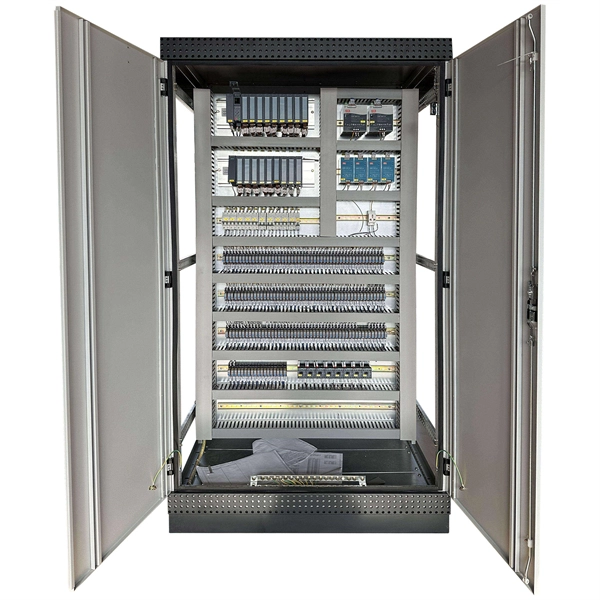
Relay Protection for Generators and Transformers
Equipment illustration / verify against the selected product
Generator Protection Relay Working Principle

Protective relays are used to detect both internal and external faults, ensuring comprehensive generator protection. They are the silent heroes and a

Protective Relaying Principles and Applications

Protective Relaying Principles and Applications The article provides an overview of protective relaying principles and their applications for high-voltage power

Generator Protection: Relays, Faults & Trip Logic

Learn generator protection relay functions, fault types, trip logic, diagrams, and review checks for safe power system generator operation.

Generator Protection

Backup Protection: Overcurrent relays and undervoltage relays provide essential backup protection for generators, ensuring faults are cleared if primary protections fail.

Power generator protection and control

Despite the monitoring, electrical and mechanical faults may occur, and the generators must be provided with protective relays which, in case of a fault, quickly initiate a disconnection of the machine from

Generator protection functions and test methods

Relay application for this protection is mainly influenced by the method of stator earthing. Two methods are in common use. With resistor earthing, the

Generator protection and control REG630 IEC

REG630 is a comprehensive generator management relay for the protection, control, measurement and supervision of small and medium sized power generators and generator-transformer units in utility

Protective Relay: Working, Types, and Applications

Learn about protective relays, their working principle, types, and applications in power systems. Discover how relays protect transformers,

Generator Protection

Protection relays protect the generator, prime mover, external power system or the processes it supplies. The fundamental principles that are covered in this course are equally applicable to

Generator Protection Theory

Provides protection against uncleared system faults (due to transmission relaying failure) to avoid contribution from this generator to any phase faults on the high side of the GSU.

China Transformer Test and Resistance Tester

China transformer test supplier, we provide Relay Protection Test, Resistance test, Circuit Breaker Test, and Partial Discharge Test for you with good price.

Relay Setting in Real Power System

Relay Settings in Real Power System: Requirements And Consideration This blog consists of a discussion on the parameters and rules in the relay setting and how they are

Power System Protective Relays: Principles & Practices

Abstract: Protective relays and devices have been developed over 100 years ago to provide “last line” of defense for the electrical systems. They are intended to quickly identify a fault and isolate it so the

EMC Test Applications

Power System protection is crucial part of power station and substations safety which use protection relays and circuit breakers to isolate faulty parts or zones within the plant including Generator zone,

Types of Electrical Protection Relays or Protective Relays

💡 Key learnings: Protective Relay Definition: A protective relay is an automatic device that senses abnormal conditions in electrical circuits and triggers actions to isolate faults. Types of

IEEE Guide for Protective Relay Applications to Transmission Lines

The purpose of this guide is to provide a reference for the selection of relay schemes and to assist less experienced protective relaying engineers in applying protection schemes to transmission lines.

Protection Relay Testing for Data Center Power Systems

Which protection relays are most critical in a data center? The most critical relays are those protecting the UPS output, generator, main transformer differential, and feeder breakers. A failure in

Transformer: Definition, Working Principle, EMF

Student-friendly transformer notes: definition, working principle, EMF equation, voltage transformation ratio, losses, efficiency, types, tests, applications

Related Video Reference

This video was associated with the source search result. Verify technical details against current product documentation and project requirements.

Specify your fiber equipment

Share the fiber interfaces, termination capacity, cable route and evidence required for handover.

Send a project brief