DOLPHIN FIBERNetwork equipment for Africa Send a project enquiry
Fiber network equipment / Technical library Optical reference library

Power System Relay Protection Relays

Jump to a section
Source context

AI source overview

Power system relay protection ensures the safe, reliable, and selective isolation of faulty sections in electrical networks to protect equipment and maintain system stability.

Introduction to Power System Protection

Power system protection is essential to safeguard generators, transformers, transmission lines, and distribution networks from faults such as short circuits, overcurrents, and abnormal operating conditions. Faults can cause equipment damage, power outages, and safety hazards. Protective relays, in combination with circuit breakers and switchgear, form the backbone of a protection system that detects faults and isolates affected sections while keeping the rest of the system operational.

Role of Protective Relays

A protective relay is a control and measurement device that continuously monitors electrical parameters such as current, voltage, frequency, and impedance. When it detects an abnormal condition exceeding predefined thresholds, it sends a trip signal to a circuit breaker to isolate the faulted section. Relays do not interrupt current directly; they act as decision-making devices that ensure timely and selective fault clearance.

Key functions of protective relays include: Fault Detection: Identifying abnormal conditions before significant damage occurs. Trip Initiation: Sending precise commands to circuit breakers for immediate isolation. System Stability: Maintaining voltage, frequency, and power quality to prevent cascading failures.

Equipment Protection: Safeguarding transformers, generators, motors, and other critical assets. Operational Continuity: Limiting outages to the affected area while keeping the rest of the system online.

Types of Protective Relays

Protective relays can be classified based on their operating principles and technology: Electromechanical Relays: Operate using magnetic or thermal mechanisms; historically common but slower and less flexible. Static Relays: Use electronic circuits for faster response and improved accuracy.

Microprocessor-

Based (Digital) Relays: Multifunctional devices capable of complex logic, communication, and self-diagnostics, widely used in modern power systems.

Relay Applications and Schemes

Relays are applied to various components of the power system: Overcurrent Relays: Protect feeders and transformers from excessive current. Directional Relays: Detect the direction of fault current for selective isolation. Distance (Impedance) Relays: Protect transmission lines by measuring line impedance.

Differential Relays: Protect transformers, generators, and busbars by comparing currents at different points. Earth Fault Relays: Detect ground faults and prevent equipment damage. Protection schemes often include primary and backup relays, ensuring redundancy.

Coordination studies determine relay settings, time delays, and zones of protection to achieve selectivity and minimize disruption. Integration with SwitchgearProtective relays work in conjunction with switchgear, which includes circuit breakers, disconnect switches, and fuses. When a relay detects a fault, it signals the breaker to interrupt current flow, isolating the faulty section.

Switchgear also allows safe maintenance and operational control of the power system.

Modern Considerations

Advancements in digital relays and IEC 61850-based substation automation have enhanced protection speed, accuracy, and communication capabilities. Modern systems also focus on reducing arc flash energy, improving fault detection selectivity, and integrating monitoring and control for preventive maintenance.

Conclusion

Power system relay protection is a critical component of electrical networks, ensuring equipment safety, system stability, and operational continuity. Understanding relay types, operating principles, coordination, and integration with switchgear is essential for engineers and operators to design and maintain reliable power systems.

Research context

Reference summary

Power System Protective Relays: Principles & PracticesProtective relays and devices have been developed over 100 years ago to provide “last line” of defens.

From reference to enquiry

Questions for your project

Use these editorial prompts alongside the linked excerpts. They identify items to confirm for your project.

Detailed reading / connection to installation

Fiber infrastructure reference
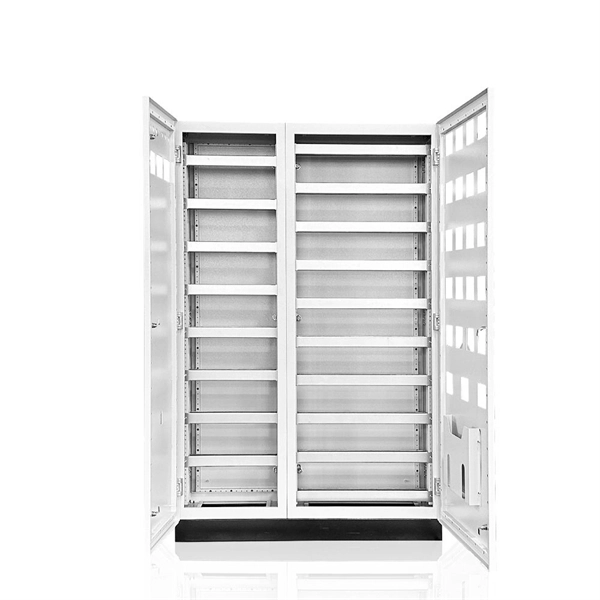
Power System Relay Protection Relays
Equipment illustration / verify against the selected product
Power System Protective Relays: Principles & Practices

Protective relays and devices have been developed over 100 years ago to provide “last line” of defense for the electrical systems. They are intended to quickly identify a fault and isolate it so the balance of

Protective Relay: Working, Types, and Applications

Learn about protective relays, their working principle, types, and applications in power systems. Discover how relays protect transformers, generators, and transmission lines from faults.

Relays: How They Work, Types, Contacts & Power System Uses

A practical engineering guide to how relays work, relay contacts, relay types, relay ratings, control circuits, and protective relay applications in power systems.

A Complete Guide to Protective Relays and Their Role in Power

Protective relays are essential in power systems to detect faults, isolate problem areas, and prevent widespread damage. Their use spans high-voltage transmission, industrial machinery,

Types of Electrical Protection Relays or Protective Relays

Operating Principles: Protective relays operate by detecting abnormal signals, with specific pickup and reset levels to start or stop their action. Application in Power Systems: Primary

POWER SYSTEM PROTECTION

Protective relays and schemes are essential components of electrical power systems, designed to detect and respond to abnormal conditions to protect equipment and ensure system reliability.

Primary Protection Relays | ABB

ABB''s Relion family of protection and control relays for primary distribution offers a wide range of products for protection, control, measurement and supervision of power distribution systems for IEC

Understanding Protective Relays in Power Systems

Protective relays are critical components in power systems, providing essential protection for various elements such as generator sets, outgoing feeder and load networks, and incoming utility

Modern Power System Protective Relaying

This Modern Power System Protective Relaying training course has been designed to provide a clear and perfect understanding of power system protection schemes and devices, including protection

POWER SYSTEM PROTECTION RELAYS AND HARDWARE

You will gain a thorough understanding of the capabilities of power system protection relays and how they fit into the overall distribution network. The practical sessions covering the calculation of fault

Protective Relays: Types, Working Principle & Uses

Protective relays are power system protection devices that monitor current, voltage, frequency, impedance, or differential quantities and command

Protection relays

Numerical relays are based on the use of microprocessors. Numeric relays are programmable. Most numerical relays are also multi-functional.

Basic Types of Protection Relays and Their Operation

Protective relays are the building blocks used to develop protection systems. Digital relays held an enormous advantage over any of their predecessors with the new ability to add

Protective Relaying Principles and Applications

Protective Relaying Principles and Applications The article provides an overview of protective relaying principles and their applications for high-voltage power system components. It covers the protection

Power System Protection

The protective relay on the other hand must be able to recognize an abnormal condition in the power system and take suitable steps so that there will be least possible disturbance to normal operation.

The Essentials of Relay Protection and Control in Power

Learn power system protection and control concepts, protection schemes and relays, primary & secondary equipment, and electrical wiring with practical

Basic protection relay knowledge

Power system stability means also ability to maintain acceptable voltage. Stability may be lost due to too long clearing time of faults ( too long operate times of protection ) Problem with selectivity can also

The basics of power system protective relaying

Protective Relaying The IEEE defines protective relays as: “Relays whose function is to detect defective lines or apparatus or other power system conditions of an abnormal or dangerous

Related Video Reference

This video was associated with the source search result. Verify technical details against current product documentation and project requirements.

Specify your fiber equipment

Share the fiber interfaces, termination capacity, cable route and evidence required for handover.

Send a project brief