DOLPHIN FIBERNetwork equipment for Africa Send a project enquiry
Fiber network equipment / Technical library Optical reference library

Optical Module Oligopoly

Jump to a section
Source context

AI source overview

The optical module market has historically been dominated by a few major players, but new entrants like Credo are beginning to challenge this oligopoly, driven by high-speed data and AI infrastructure demand.

Market Overview

Optical modules are critical components in fiber-optic communications, performing both photoelectric and electro-optical conversion. They are essential for high-speed data transmission in data centers, telecom networks, and 5G infrastructure. The global optical module DSP chip market was valued at USD 2.

85 billion in 2025 and is projected to reach USD 11. 14 billion by 2032, reflecting a 21. 5% CAGR due to increasing demand for higher data rates and efficient digital signal processing.

Similarly, the broader optical module chip market is expected to grow from USD 823 million in 2024 to USD 1. 52 billion by 2032, driven by hyperscale data centers and 5G deployments.

Oligopoly Structure

Historically, the optical module market has been controlled by a small number of international giants, including Coherent Corp, Lumentum, and Accelink Technologies, who dominated high-speed optical modules and DSP chips. This concentration created an oligopoly, where a few firms set pricing, technology standards, and supply chain practices. The market's high barriers to entry—complex DSP design, precision assembly, and yield-sensitive components—reinforced this structure.

Emerging Competition

Recent developments indicate a shift in this oligopoly. Credo (Mosheng Technology), founded in 2008 in Shanghai, has entered the market with high-performance DSP chips for PAM4 optical modules, supporting 400G and 800G data rates. Credo's Seagull 50 and Dove series DSPs offer competitive power efficiency and cost advantages, enabling broader adoption of DML lasers and accelerating the development of less mature optical components.

This entry challenges the dominance of traditional players and introduces more competition in pricing and innovation.

Technological Drivers

The rise of AI and hyperscale data centers is reshaping the optical module market. Next-generation pluggable modules, such as Arista's XPO, deliver extremely high bandwidth (up to 12. 8Tbps per module) and improved density, cooling, and power efficiency, reflecting the growing performance demands of AI workloads.

These technological pressures are forcing both incumbents and new entrants to innovate rapidly, further eroding the traditional oligopoly.

Market Implications

Pricing and competition: New entrants like Credo may drive down costs and increase module availability. Innovation acceleration: AI and 5G demand incentivizes faster development of high-speed DSPs and PAM4 modules. Supply chain complexity: Despite new players, the market remains sensitive to semiconductor material constraints and yield-sensitive component production.

Conclusion

While the optical module market has long been an oligopoly dominated by a few global firms, the combination of AI-driven data center growth, 5G expansion, and new DSP entrants like Credo is gradually reshaping the competitive landscape. This transition promises more innovation, potential cost reductions, and a more dynamic market structure in the coming years.

Research context

Reference summary

Optical Module Chip Market 2025 Optical Module Chip Market size was valued at US$ 823 million in 2024 and is projected to reach US$ 1. 52 billion by 2032, a.

From reference to enquiry

Questions for your project

Use these editorial prompts alongside the linked excerpts. They identify items to confirm for your project.

Detailed reading / connection to installation

Fiber infrastructure reference
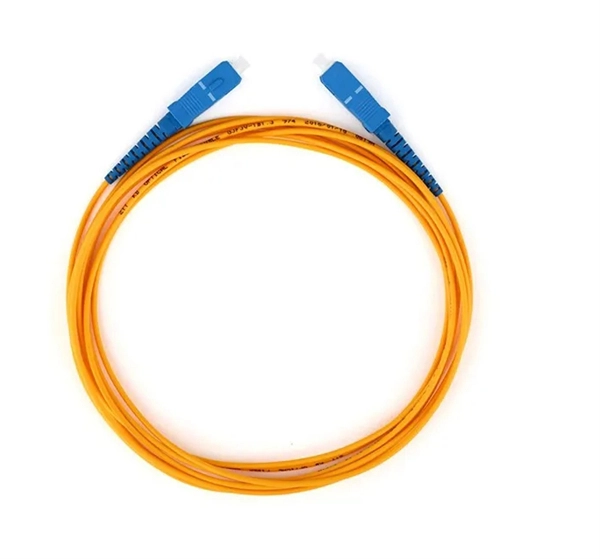
Optical Module Oligopoly
Equipment illustration / verify against the selected product
Optical Module Chip Market 2025

Optical Module Chip Market size was valued at US$ 823 million in 2024 and is projected to reach US$ 1.52 billion by 2032, at a CAGR of 8.0%

Optical Modules Market Research Report 2034

The optical module DSP chip market ran as a tight oligopoly in 2025, with dominant vendors leaning on two advantages: proprietary silicon intellectual property and close, long-running

Chinese Optical Modules Own 7 of the Top 10 Seats. So Why Are

Chinese Optical Modules Own 7 of the Top 10 Seats. So Why Are Chip Companies Still Making the Money? Assembly Powerhouse, Chip Desert: The Structural Limits of China''s Optical

Optical module

The main trade show for the large optical module industry is the Optical Fiber Conference (OFC), that is held annually in southern California. Other prominent shows for the industry include ECOC in Europe

4-3-2 Global Optical Module Dominant Players: Marvell, Lumentum,

Currently, the global high-end optical communication DSP market is virtually monopolized by a duopoly: Marvell (after acquiring Inphi) and Broadcom.

Deep Dive: Optical Module Market

Today, I''m exicited to share an in-depth analysis of the global optical module market, an industry I find particularly compelling due to its critical role in data center networks for the

Pluggables, Power, and Geopolitics: Mapping the 800G and 1.6T

Technologically, the industry is embroiled in a debate between Digital Signal Processor (DSP)-based retimed optics, which remain the standard for interoperability, and Linear Pluggable

The Most Comprehensive Guide Of Optical Modules

Explore the ultimate guide to optical modules. Learn types, functions, performance metrics & how to choose the right module for your fiber network.

Optical Module Market Analysis and Forecast in 2026

AI computing power has driven explosive growth in the optical module market, with 800G and 1.6T technologies leading the industry transformation.

Samsung Foundry Reportedly Wins Optical Module Order,

Samsung Foundry is reportedly stepping up its silicon photonics efforts. According to ZDNet, the company said in its 1Q26 earnings release that its foundry has secured orders from a

POET Technologies and LITEON Announce Joint Development of Optical

‍ SAN JOSE, CA, March 16, 2026 –– POET Technologies Inc. (" POET " or the " Company ") (NASDAQ: POET), a leader in the design and implementation of highly-integrated optical engines and light

Active Optical Module Market Research Report 2034

Active Optical Module market valued at $10.7 billion in 2025, projected to reach $35.6 billion by 2034 at 14.2% CAGR, driven by data center expansion and 5G deployment.

GlobalFoundries accelerates adoption of co-packaged optics for

GlobalFoundries (Nasdaq: GFS) (GF) today announced the introduction of its SCALE™ optical module solution for co-packaged optics (CPO)

Optical Module MCUs Become Critical as AI Data Centers Drive

MCU chips for optical modules emerge as a critical semiconductor segment as AI data center buildout drives 800G/1.6T demand, with domestic players GigaDevice and Nations

Opinion: optical transceivers at the chokepoint of AI growth and supply

As AI infrastructure accelerates at an unprecedented pace, optical connectivity has become one of the defining enablers and constraints of next-generation data centers. In this Opinion

Optical module design resources | TI

View the TI Optical module block diagram, product recommendations, reference designs and start designing.

From optical modules to chips: China''s tech supply chains sustain

Huagong Tech, an optical module manufacturer based in central China''s Wuhan, launched the world''s first 12.8-terabit XPO module in March, bundling the capacity of eight 1.6T modules into a

Designing a Module for High-Speed Optical Communication

The ultimate goal for all-optical connectivity with an ultra-high F5G bandwidth is to increase transmission rates. Optical modules — the foundation of optical communication networks — face the design

Specify your fiber equipment

Share the fiber interfaces, termination capacity, cable route and evidence required for handover.

Send a project brief