DOLPHIN FIBERNetwork equipment for Africa Send a project enquiry
Fiber network equipment / Technical library Optical reference library

How to use the new multi-wavelength light source

Jump to a section
Source context

AI source overview

Multi-wavelength light sources can be used by selecting appropriate wavelengths, managing power levels, and integrating with optical systems via collimation, multiplexing, and software control. Understanding Your Light SourceMulti-wavelength light sources, such as Ayar Labs' SuperNova or Mightex collimated LED sources, provide multiple discrete wavelengths in a single output beam, suitable for high-speed optical I/O, spectroscopy, microscopy, or AI interconnects. Devices like the SuperNova can deliver up to 16 wavelengths and drive multiple optical ports, while LED-based sources allow flexible wavelength combinations with ultra-fast switching and high power stability.

Some systems, like Quantifi Photonics' Laser 1300 Series, integrate these sources into PXIe modules with software control for synchronized operation.

Step-by-

Step Usage

Select Wavelengths and Power LevelsDetermine the wavelengths required for your application.

For LE

D sources, rank LEDs from long to short wavelengths to optimize optical path length. Verify the current rating for each LED or laser channel and ensure you do not exceed it.

LE

Ds must be driven by a constant-current source, not a voltage source.

Assemble or Connect the Source

For collimated LED sources, combine LEDs using a beam combiner, ensuring proper alignment for either “straight-through” or “equal-path” configurations. For integrated laser modules like SuperNova or Laser 1300 Series, connect the module to your optical system or PXIe chassis according to the manufacturer's instructions.

Collimation and Optical Coupling

Ensure the output beam is collimated for compatibility with lenses, filters, dichroic mirrors, or other optical components. Adjust the optical path to minimize losses and maintain uniform intensity across wavelengths.

Software Control and Synchronization

Use the provided software interface (e.g., CohesionUI™ for Quantifi Photonics) to control individual wavelengths, trigger sequences, and synchronize with other instruments. For high-speed applications, ensure timing and modulation settings match your system requirements.

Safety and Thermal Management

Monitor device temperature and use cooling mechanisms if required, especially for high-power LEDs or lasers. Follow standard laser safety protocols, including protective eyewear and controlled beam paths.

Best Practices

Calibration: Regularly calibrate wavelength output and power levels to maintain accuracy. Integration: Match the source to your optical system's numerical aperture and fiber coupling requirements. Maintenance: Inspect optical components for dust or misalignment to prevent signal degradation.

Documentation: Follow manufacturer manuals for CW-WDM MSA compliance and multi-channel operation. By carefully selecting wavelengths, managing power, and integrating with optical systems using proper collimation and software control, you can maximize the performance of a multi-wavelength light source for applications ranging from AI optical interconnects to spectroscopy and microscopy.

Research context

Reference summary

Our SuperNova Light Source for Co-Packaged OpticsAs the first optical source designed to be compliant with the CW-WDM MSA specification, our SuperNova ligh.

From reference to enquiry

Questions for your project

Use these editorial prompts alongside the linked excerpts. They identify items to confirm for your project.

Detailed reading / connection to installation

Fiber infrastructure reference
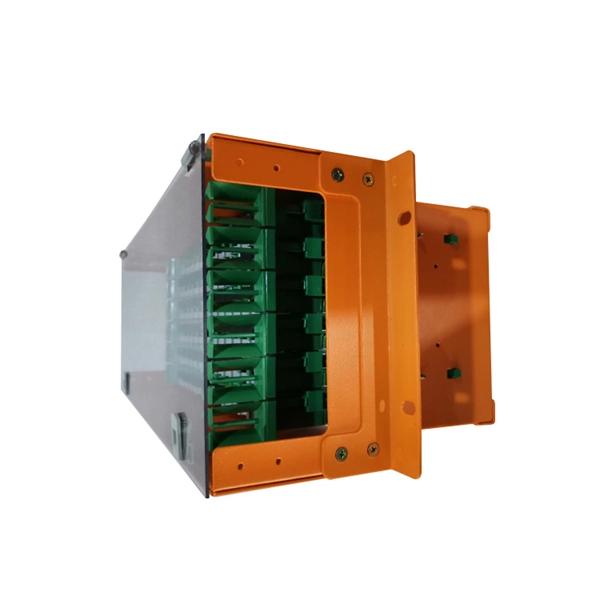
How to use the new multi-wavelength light source
Equipment illustration / verify against the selected product
Our SuperNova Light Source for Co-Packaged Optics

As the first optical source designed to be compliant with the CW-WDM MSA specification, our SuperNova light source can be deployed across a wide range

Integrated multi-port multi-wavelength coherent optical source for

Here, we demonstrate a multi-wavelength multi-port source based on a Kerr microcomb followed by a monolithically-integrated demultiplexer, which autonomously locks to and tracks the

Multi‐Wavelength Quantum Light Sources on Silicon

Despite recent impressive advances, developing such a quantum light source with high quality remains challenging. Here a multi-wavelength quantum

CW-WDM MSA Compliant InP Laser Sources for Hybrid Silicon

The first optical source designed to be compliant with the CW-WDM MSA specification, SuperNova can be deployed across a wide range of applications including high-speed I/O, artificial intelligence,

Powerful and Precise Multi-color Lasers Now Fit on a Single Chip

By making high-power, multi-wavelength combs small enough to fit directly on a chip, Lipson''s team has made it possible to bring this capability into the most compact, cost-sensitive parts

Multi-wavelength sources for Optical IO Co-packaged optics

Abstract: 8 and 16 wavelength optical sources for optical IO applications are reviewed. A new CW-WDM MSA compliant, 16 wavelength source operating from 20 to 100°C is presented.

16-wavelength comb source based on multi-wavlength DFB lasers for

In this work, we present a compact 16-wavelength comb source based on four multi-wavelength distributed feedback (DFB) lasers.

Multiwavelength

The LEDs can be modified to the customer''s specifications, which includes power and wavelength sorting. InGaAs and silicon photodiodes can also be added into

Compact High-Resolution Multi-Wavelength LED Light Source for Eye

Therefore, in response to these challenges, in this paper, we introduce and describe a flexible solution for eye stimulation, specifically a compact and cost-efficient multi-wavelength LED

Optical networks | Nokia

Wavelength division multiplexing is an optical networking technology designed to enable transmitting a greater amount of information over a single pair of fiber

IPL Treatment: Cost, Procedure, and More

IPL is a type of light therapy that''s used to treat wrinkles, spots, and unwanted hair. Find out how it works, how much it costs, and more.

Wavelength

The wavelengths of sound frequencies audible to the human ear (20 Hz –20 kHz) are thus between approximately 17 m and 17 mm, respectively. Somewhat higher frequencies are used by bats so they

Blue light has a dark side

If you work a night shift or use a lot of electronic devices at night, consider wearing blue-blocking glasses or installing an app that filters the

The science of why friendships keep us healthy

American culture prioritizes romance, but psychological science is exploring the human need for platonic relationship sand the specific ways in which they bolster well-being.

Research of multiple wavelength light source based on super

Abstract In order to meet the requirements of the multi-wavelength light source of large-capacity, high-speed, long-distance optical communication system, we researched the multi

World''s first single chip multiwavelength laser

Scintil Photonics in France is showing the world''s first single-chip, multi-wavelength laser source for large AI datacentre networks. LEAF Light is a

Multi-wavelength optical information processing with deep

In systems based on dispersion compensating fiber, micro-ring resonator array, and Mach-Zehnder interferometer array that use multi-wavelength optical carriers as the light source, the

Integrated multi-port multi-wavelength coherent optical source for

The authors showcase a compact, energy-efficient multi-wavelength light source for scalable multi-Tb/s optical links. The system integrates a Kerr microcomb with a CMOS-compatible

Specify your fiber equipment

Share the fiber interfaces, termination capacity, cable route and evidence required for handover.

Send a project brief