DOLPHIN FIBERNetwork equipment for Africa Send a project enquiry
Fiber network equipment / Technical library Optical reference library

Fiber Optic Packaged Sensors

Jump to a section
Source context

AI source overview

Fiber optic packaged sensors are optical devices integrated into protective platforms to enable precise, multi-parameter sensing in harsh or constrained environments.

Overview

Fiber optic sensors (FOS) use optical fibers to detect physical, chemical, or biological changes by modulating light properties such as intensity, phase, polarization, or wavelength. Packaged sensors embed these fibers into protective structures—such as microfluidic chips, catheters, or metal/glass housings—to ensure durability, environmental resistance, and ease of integration into real-world applications.

Types of Fiber Optic Sensors

Intrinsic Sensors: The fiber itself acts as the sensing element, with light modulation occurring within the fiber due to strain, temperature, or refractive index changes. Extrinsic Sensors: The fiber guides light to an external transducer, which interacts with the target environment and returns the signal. Hybrid Sensors: Combine intrinsic and extrinsic principles, allowing light to interact both within the fiber and with external sensing elements.

Common sensor designs include fiber Bragg gratings (FBG), U-bent fibers, D-shaped fibers, tapered fibers, ball resonators, and Fabry–Perot interferometers (FPI), each optimized for specific sensitivity, spatial resolution, or environmental conditions.

Packaging Techniques

Packaging is critical for protecting fragile fibers while maintaining sensor performance: Polymer-based packages: Easy to fabricate, suitable for moderate environmental loads, and often used in biomedical or wearable devices. Metal-based packages: Provide robust protection in high-pressure or high-temperature environments but may reduce strain sensitivity if not carefully designed. Glass sealant packages: Offer hermetic sealing, high-temperature stability (up to 1000°C), and compatibility with metal tubes, enabling multi-parameter sensing (temperature, strain, pressure) in harsh environments like nuclear power plants.

In biomedical applications, packaging often involves microfluidic chips, catheters, or lab-on-fiber platforms, ensuring the sensor is shielded while allowing analyte access for accurate measurements.

Applications

Industrial and Energy Systems: Monitoring temperature, pressure, and strain in pipelines, reactors, and turbines. Structural Health Monitoring: Distributed sensing of bridges, tunnels, and composite materials for strain, vibration, and temperature. Biomedical Devices: In vivo sensing of chemical or biological analytes, integrated into microfluidic or wearable platforms.

Harsh Environments: High-radiation, high-temperature, or high-pressure conditions where conventional sensors fail.

Advantages

High sensitivity and precision: Capable of detecting minute changes in strain, temperature, or chemical composition. Environmental robustness: Resistant to electromagnetic interference, chemical corrosion, and mechanical stress. Miniaturization and multiplexing: Multiple sensors can be integrated along a single fiber for simultaneous multi-parameter monitoring.

Remote sensing capability: Fiber extensions allow placement in confined or hazardous locations without electronics at the sensing point.

Conclusion

Fiber optic packaged sensors combine the high sensitivity of optical fibers with protective packaging to enable reliable, multi-parameter sensing in diverse applications, from industrial monitoring to biomedical diagnostics. Advances in packaging materials, such as glass sealants and microfluidic integration, have expanded their usability in extreme environments and in vivo applications, making them a versatile solution for modern sensing challenges.

Research context

Reference summary

Unpacking the packaged optical fiber bio-sensors. A proper packaging approach is frequently as challenging as the sensor architecture itself. Therefore.

From reference to enquiry

Questions for your project

Use these editorial prompts alongside the linked excerpts. They identify items to confirm for your project.

Detailed reading / connection to installation

Fiber infrastructure reference
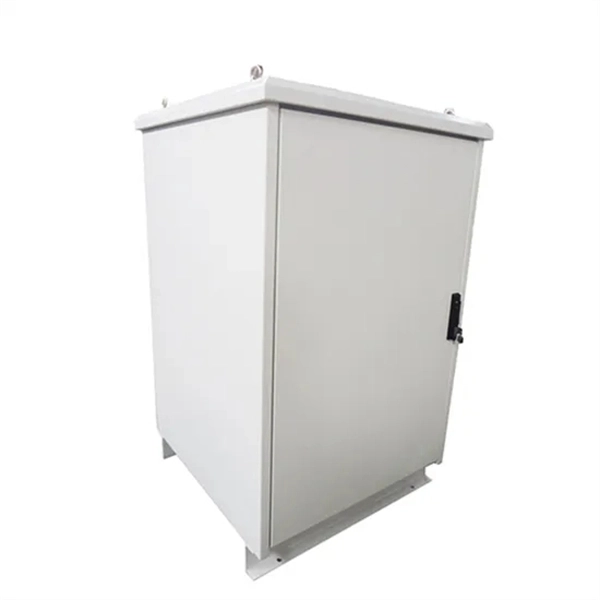
Fiber Optic Packaged Sensors
Equipment illustration / verify against the selected product
Unpacking the packaged optical fiber bio-sensors

A proper packaging approach is frequently as challenging as the sensor architecture itself. Therefore, this review aims to give an unpack different aspects of the integration of optical fiber

Optical Fiber Sensors: High Resolution Fiber Optic Sensing

Sensuron''s Optical Fiber Sensors enable engineers to collect and analyze material and structural data based on minute changes in tens of thousands of points of light. Measured in real

Advanced Fiber Optic Sensing Technology in

Based on this reason, this paper will introduce the classification and working principle of fiber optic sensors in aircraft application scenarios, analyze

Fiber Optic Sensors: Fundamentals, Principles & Applications

Light Injection into the Optical Fiber Source (Laser, LED etc.) Transmission of Modulated Light to a Monitoring Point Detector (PIN Diode, Avalanche Diode) Optical Fiber (Transmission Medium,

Fiber-Optic Pressure Sensors: Recent Advances in

This review further examines current manufacturing technologies for fiber-optic pressure sensors, covering key processes including fiber processing

Detection sensors

When installation space is extremely limited or the objects to be detected are tiny, fiber-optic sensors are the ideal solution.

FIBER-OPTIC SENSORS

Today, already with over 500 standard, application or customer specific fiber optic sensors, we take pride in working together with you to ensure the best performance fit for your application. Our global

Systematic review of fiber-optic distributed acoustic sensing

Distributed Acoustic Sensing (DAS) is an advanced optical fiber technique that uses Rayleigh backscattering to offer real-time monitoring and data collection across a wide range of

Unpacking the packaged optical fiber bio-sensors: understanding the

Yet the widespread applications of optical fiber biosensor have been hindered; one of the reasons is the lack of suitable packaging for their real-life application.

Fiber Optic Sensors: Short Review and Applications

An extensive review of optical fiber sensors and the most beneficial applications is presented in this chapter. Although electrical sensing technologies have been successfully deployed

Review of Optical Fiber and Integrated Photonic Sensors for

Smart manufacturing, Industry 4.0, and cyber-physical systems (CPSs) require sensing architectures capable of resolving both spatially distributed asset behavior and highly localized

Unpacking the packaged optical fiber bio-sensors: understanding the

An overview of packaged optical fiber bio-sensors. The inner circle depicts the types of optical fiber sensors; the middle circle shows the types of packages used to integrate the sensors while the outer

Optical Fiber Sensors and Sensing Networks: Overview of the Main

Therefore, the integration of optical fiber sensors in WSNs introduces benefits and new capabilities for the design of advanced hybrid-sensing systems . This paper provides a review of optical fiber

Fiber Optic Temperature Sensing and Measurement

Measure temperature with fiber optic sensors for high-resolution distributed and multipoint monitoring in batteries, processes, and harsh environments.

Characterization of Engineering-Suitable Optical Fiber Sensors Packaged

Glass fiber-reinforced polymer- (GFRP-) packaged optical fiber (OF) sensors are considered a promising engineering-suitable sensor for structural health monitoring. To date, some

What is Fiber Optic Sensing?

Learn how fiber optic sensing technology, including distributed acoustic sensing (DAS), distributed temperature sensing (DTS), and distributed temperature and strain sensing (DTSS), delivers real

Metal-embedded fiber optic sensor packaging and signal

Proper packaging of fiber-optic sensors could extend their use to harsh environments, including at high temperature and under high radiation. Furthermore, conventional fiber optic-based

Fiber optic sensors and fiber optics | Baumer USA

Fiber optic sensors and fiber optics - limitless and customized The perfect solution with the fiber optics sensor toolbox Over 350 customized fiber optic solutions Smaller, more precise, faster Robust - High

Related Video Reference

This video was associated with the source search result. Verify technical details against current product documentation and project requirements.

Specify your fiber equipment

Share the fiber interfaces, termination capacity, cable route and evidence required for handover.

Send a project brief