
Fiber infrastructure reference
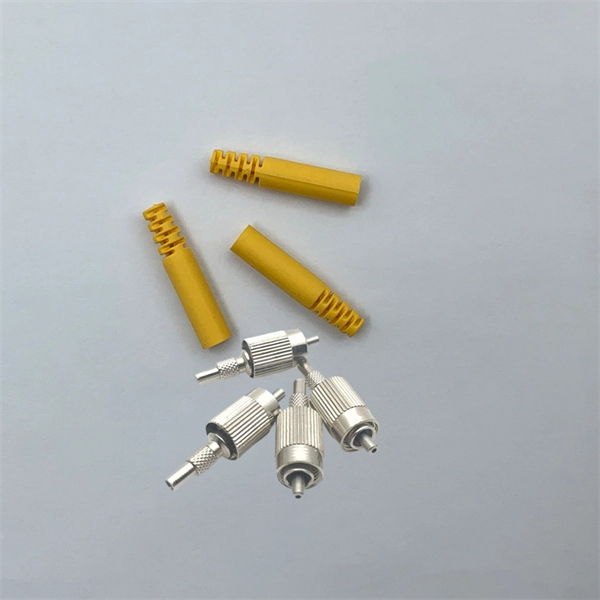
Fiber Optic High Current Sensor
Fiber Optic Current Sensors (FOCS) are ideal for high-voltage substations, aluminum smelting, and aerospace applications. They are immune to electromagnetic.
ABB FOCS – Fiber-Optic Current Sensors
Now available for uni- or bi-directional dc current measurement up to 500kA, with corresponding sensor head sizes, it offers an easily installed, interference-free alternative to the Hall effect current
Measurement of Electric Current using Optical Fibers: A
Next paper presents a fiber-optic current sensor (FOCS), customized for measurement of harmonic current in high-voltage electric power systems.
Fiber-optic current sensor
Interferometric fiber optic current sensors (FOCS) employ circularly polarized light traversing a closed loop path around an electrical conductor''s current-generated magnetic flux, which reflects off a mirror.
Highly sensitive fiber optic current sensor based on conductive silver
In this study, a novel fiber optic current sensor based on parallel FPI was developed by uniformly applying CSA to the sensing cavity. The sensitivity of this sensor is significantly enhanced
Fiber Optic Sensors | KEYENCE America
Fiber Optic Sensors A fiberoptic sensor that uses diverse fiber units to support various applications in virtually any environment. These are reliable and easy-to
Fiber Optic Sensors: Principles, Types, and Uses
This article will explore the principles behind fiber optic current sensors, examine the different types, and discuss their real-world applications in various industries.
Fiber Optic Current Sensors and Optical Current Transformers
The basic principle of Fiber Optic Current Sensors (FOCS) and Optical Current Transformers (OCTs) is to measure polarization rotation due to the Faraday effect.
Fiber diamond-based quantum sensor for high-precision current
In this study, we developed a fully fiber-integrated nitrogen-vacancy (NV) center current sensing system, which incorporates an optimized tapered fiber probe to significantly improve
Intelligent compensation method for measurement errors in optical fiber
Downloadable! Temperature variations significantly degrade the measurement accuracy of fiber optic current sensors (FOCS) in critical power systems applications such as high-voltage transmission and
Power Over Fiber – optical delivery of power, photonic
Power over fiber means the delivery of power for electronic devices via light in an optical fiber. This is advantageous for some applications.
Design of a Fiber-Optic Mach–Zehnder Interferometric Sensing Cell
Currently, detecting metal particle defects in a gas-insulated switchgear (GIS) relies mainly on a lead–zirconate–titanate (PZT) piezoelectric sensing system. However, its performance falls short of
Shahed-136: Cost, Production Rate, RCS
Cost multiplication: Defenders expend high-value interceptors on $10,000 decoys, worsening the already unfavorable cost-exchange ratio. EW
DwyerOmega | Shop for Sensing, Monitoring and Control Solutions
Explore DwyerOmega''s comprehensive range of industrial sensing, monitoring, and control solutions from thermocouples to pressure transducers engineered for precision and reliability.
Electrical Asset Condition Monitoring | Rugged Monitoring
Discover AI-powered electrical asset condition monitoring. Improve power grid reliability with real-time data-driven insights.
IJERT – International Journal of Engineering Research
IJER 100% emphasis on high quality research content, thorough peer-review which exists on all our research and review articles, ensuring we publish scientifically
Unlocking the ionic transport dynamics modulated by
Here, we present an operando optical platform based on tilted fiber Bragg grating sensors and infrared fiber spectroscopy to resolve lithium-ion and sodium-ion transport dynamics at high
ABB FOCS – Fiber-Optic Current Sensors
The new ABB Fiber-Optic Current Sensor is a development of a sensor first used in high-voltage substations. Now available for uni- or bi-directional dc current measurement up to 500kA, with
Related Video Reference
This video was associated with the source search result. Verify technical details against current product documentation and project requirements.