
Fiber infrastructure reference
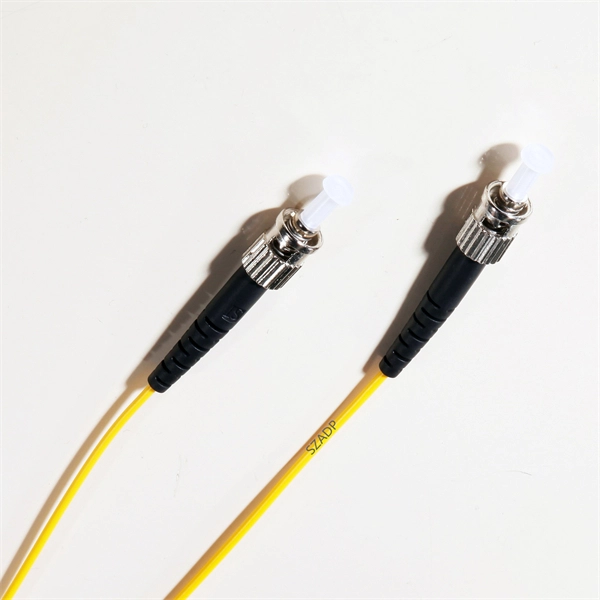
Fiber Bragg Gratings – FBG, index modulation, filters, fiber-optic sensors
A fiber Bragg grating is a structure within the core of an optical fiber with a periodic variation of the refractive index. It acts as a wavelength-selective mirror, reflecting light in a narrow range of
Fiber Bragg Gratings – Precision Light Control Solutions
Discover Fiber Bragg Gratings (FBGs) for precise light control, high durability, and compact designs. Perfect for telecommunications, lasers, and sensing.
Recent Advances in Fiber Bragg Grating Sensing
In conclusion, this comprehensive review paper provides a panoramic view of the recent advancements in Fiber Bragg Gratings (FBGs) and their diverse applications in optical fiber sensors.
How a Fiber Grating Works and Its Real-World Applications
An optical fiber guides light along its core, a central channel of pure glass. The operation of a fiber grating relies on a permanent modification of this core, achieved by exposing a section of
Optical Grating Simulation and Design | Software
Emerging as a de facto standard over the last decade, OptiGrating has delivered powerful and user-friendly design software for modeling integrated and fiber optic
Fully automatic fabrication of fibre Bragg gratings using an AI-powered
In this study, we present an AI- powered FLI system that enables automated, stable, and efficient FBG fabrication. By integrating a Multi-Layer Perceptron (MLP) model for real-time fabrication position
Fiber Bragg Gratings (FBG) | Optromix
When a laser beam is injected into the fiber, a signal analyzer (interrogator) identifies the wavelengths that pass through the grating, while the rest are
Fiber Optic FBG Fiber Bragg Grating Sensing Solutions
AtGrating is a professional company for optical fiber sensing. AtGrating offers industrial solutions by providing customized sensors and sensing instruments
Optical sensing using fiber bragg gratings: Fundamentals and
In this article, Fiber Bragg Grating (FBG) technology used to implement fiber sensors is explained and some applications in temperature and strain measurements are presented.
Bragg Gratings in Optical Fibers: Fundamentals and Applications
The development of fiber optics has revolutionized the field of telecommunications making possible high-quality, high-capacity, long distance telephone links Over the past three decades, the advancements
Fiber Gratings
Fiber Gratings Silica fibers can change their optical properties permanently when they are exposed to intense radiation from a laser operating in the blue or ultraviolet spectral region. This photosensitive
All-fiber STED microscopy illumination system
We demonstrate all-fiber STED illumination using vortex fiber modes excited via fiber gratings. The grating''s high purity mode conversion (98.7%) yields a depletion beam with 20.5dB extinction ratio,
Microsoft Word
2. Theory and models of FBG Fiber Bragg Grating (FBG) technology is one of the most popular choices for optical fiber sensors for strain or temperature measurements due to their simple manufacture, as
1. What Are Diffraction Gratings? | Technical Guide | SHIMADZU
Diffraction gratings are optical elements that disperse mixed light (white light) into individual wavelengths. We also explain the grating equation.
Fiber Grating Devices in High-Performance Optical Communications
Once exposed, the grating is essentially permanent. Fiber gratings are considered as critical components for many applications in fiberoptic communications and sensor systems.
Light diffusing optical fiber for Illumination
Optical fibers are used for a variety of applications where light needs to be delivered from a light source to a remote location. Because optical fibers are typically designed to efficiently deliver light from point
Optical Gratings | ZEISS high performance optical gratings
High performance, aberration corrected ZEISS optical gratings offer preeminent precision for your analytical devices. Regardless of your application needs, our
Fiber-Optic Sensing: Leveraging three decades of fiber Bragg grating
Propelled by three decades of technological development, fiber-Bragg-grating-based optical sensors continue to advance and serve existing and new sensing applications.
Related Video Reference
This video was associated with the source search result. Verify technical details against current product documentation and project requirements.