DOLPHIN FIBERNetwork equipment for Africa Send a project enquiry
Fiber network equipment / Technical library Optical reference library

Estonian Three-phase Input Single-output High-Frequency UPS Power Supply System

Jump to a section
Source context

AI source overview

A three-phase input, single-output high-frequency UPS system converts industrial three-phase AC power into a stable DC or single-phase AC output using high-frequency conversion, offering high efficiency, reduced component stress, and compact modular design.

System Overview

A three-phase input UPS draws power from a three-phase AC source, which provides smoother and more consistent power than single-phase systems, reducing voltage fluctuations and improving efficiency for high-power loads. The system typically converts the three-phase AC to a high-frequency AC using a high-frequency inverter, which then passes through a transformer for galvanic isolation and voltage adjustment, before rectifying to a single DC or AC output. Key FeaturesHigh-Frequency Conversion: Operating at high frequencies allows the use of smaller transformers and filters, reducing system size and weight while improving response time and efficiency.

Galvanic Isolation: Ensures electrical separation between input and output, enhancing safety and protecting sensitive loads from surges or faults.

Single-

Output Configuration: Provides a stable, regulated output voltage suitable for critical equipment, such as data center racks or industrial machinery. Modular Architecture: Many modern systems, like the TriMOD or Keor series, use modular designs that allow scaling of power capacity, redundancy, and easy maintenance. Power Factor Correction (PFC): Integrated PFC circuits maintain unity power factor, improving energy efficiency and reducing reactive power on the grid.

Advantages

Reduced Component Stress: High-frequency operation lowers current stress on semiconductors and passive components, enhancing reliability. Compact and Lightweight: Smaller transformers and filters reduce volumetric footprint, making the system suitable for space-constrained installations. High Efficiency: Transformer-free or high-frequency designs can achieve efficiencies up to 96%, minimizing energy losses.

Scalability and Redundancy: Modular systems allow incremental power expansion and provide fault-tolerant operation for critical applications.

Applications

Data Centers: Supplying stable power to servers and IT racks with high efficiency and minimal downtime. Industrial Automation: Driving sensitive machinery that requires consistent voltage and protection from power disturbances. Military and Naval Systems: Handling unbalanced three-phase loads and meeting stringent standards for reliability and isolation.

Technical Considerations

Input Voltage Compatibility: Systems can operate across a range of three-phase voltages (e.g., 380–480 VAC) to accommodate global standards. Output Regulation: Single-output systems maintain precise voltage and current control, often using DSP-based closed-loop regulation. Integration: Modular units can be paralleled for higher power or redundancy, and hot-swappable modules simplify maintenance.

In summary, an Estonian three-phase input single-output high-frequency UPS combines the benefits of three-phase AC input, high-frequency conversion, galvanic isolation, and modular design to deliver reliable, efficient, and scalable power for critical applications in data centers, industrial, and military environments.

Research context

Reference summary

UPS Systems ABB has the UPS technology for every need. Protection against all power failures, voltage regulation, power factor correction and harmonics is.

From reference to enquiry

Questions for your project

Use these editorial prompts alongside the linked excerpts. They identify items to confirm for your project.

Detailed reading / connection to installation

Fiber infrastructure reference
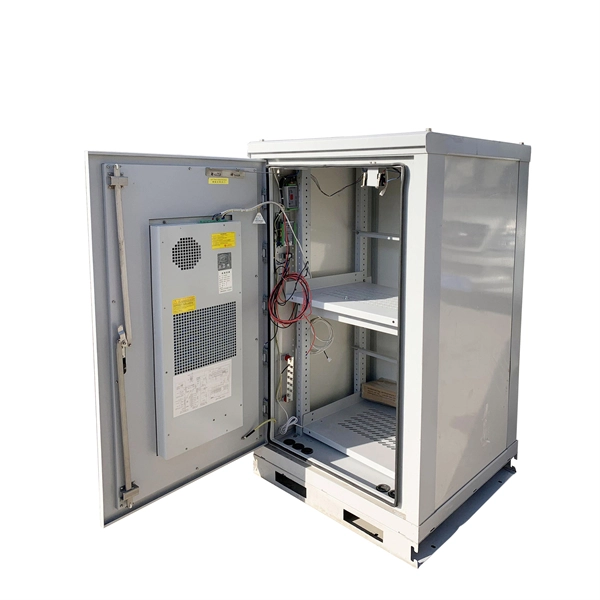
Estonian Three-phase Input Single-output High-Frequency UPS Power Supply System
Equipment illustration / verify against the selected product
UPS Systems

ABB has the UPS technology for every need. Protection against all power failures, voltage regulation, power factor correction and harmonics is guaranteed.

THREE PHASE uPS cATAloguE

With a unity output power factor, Liebert ITA2 perfectly matches the needs of modern IT loads, and with its wide input voltage and frequency range it effectively reduces the need for battery intervention,

UPS, 3 Phase Input, Single Phase Output

st level of power protection available. Large capacity 10,000 VA/8,000 watt power module continually converts incoming AC power into filtered DC power, and then resynthesizes it b. ck into AC power

Industry UPS systems

Our static uninterruptible power supply (UPS) systems comply with the VFI-SS-11 classification according to IEC 62040-3. With their robust industrial design, they

Three-Phase UPS

On-line double conversion UPS with DSP microprocessors for precise, constant control of all measurements and of the power factor correction circuit (PFC). Transformer-free technology for

Online UPS 3Ph-1Ph

Engineered to handle a three-phase input and provide a pure sine wave single-phase output, this UPS is ideal for industrial and commercial applications where balanced power distribution and high reliability

A Novel Three-Phase Three-Port UPS Employing a Single High

Abstract — A three-phase PWM rectifier and a three-phase PWM inverter are coupled via two four-quadrant full-bridge converter cells and a high-frequency isolation transformer.

Three-Phase UPS: Power, Voltage, and System Architecture Guide

Master three-phase UPS systems with expert insights on power distribution, voltage requirements, and modular vs conventional architectures.

UPS Uninterruptible Power Supply Manufacturers

INVT UPS has the characteristics of high density and modularity, high reliability and availability, flexible configuration and rapid deployment, easy installation and green energy saving, and intelligent

UPS, 3 Phase Input, Single Phase Output

Description Tripp Lite''s SU10K3/1X SmartOnline 3-Phase Intelligent, True On-Line UPS System provides mission-critical equipment with the highest level of power protection available. Large

Improvement of Input and Output Performance for Three-Level Three-Phase

This paper presents an advanced control scheme using enhanced repetitive controller (RC) to improve performance of double conversion three-phase UPS system, which is composed of

Three-Phase UPS

Three-Phase UPS Three-Phase UPS Conventional On-line double conversion UPS with DSP microprocessors for precise, constant control of all measurements and of the power factor

Eaton UPS fundamentals handbook

After identifying the power environment (if the UPS needs to be single- or three-phase), the size of the UPS further narrows the selection. In single-phase deployments especially, it often makes sense to

Single-Phase Vs Three-Phase UPS: All you need to know

For the best selection of Single-Phase and Three-Phase UPS systems, trust L&T-SuFin, an online marketplace dedicated to providing high-quality power protection solutions at the best

Three-phase UPS, Three-phase uninterruptible power supply

Output power kVA: 45 kW - 294 kW Input voltage: 400, 415, 380 V Output voltage: 380, 400, 415 V Riello UPS MULTI POWER (MPW and MPX) is a three - phase uninterruptible power supply with a

What''s The Difference Between Single Phase And Three Phase UPS?

A three-phase (3-phase) UPS can deliver more electrical power than a single-phase (1-phase) supply because it uses the full three phases generated from the grid.

Single phase vs three phase ups

Single-phase power is obtained by simply using only one phase of a three-phase system. Its root mean square (RMS) voltage is 120V (for North America) and it oscillates between its peaks of ±170V at 60

On-Line Double-Conversion UPS System, 208/240V

2.7kW 2U double-conversion UPS delivers 208/230V pure sine wave AC output, while protecting your mission-critical equipment during power outages.

Related Video Reference

This video was associated with the source search result. Verify technical details against current product documentation and project requirements.

Specify your fiber equipment

Share the fiber interfaces, termination capacity, cable route and evidence required for handover.

Send a project brief