
Fiber infrastructure reference
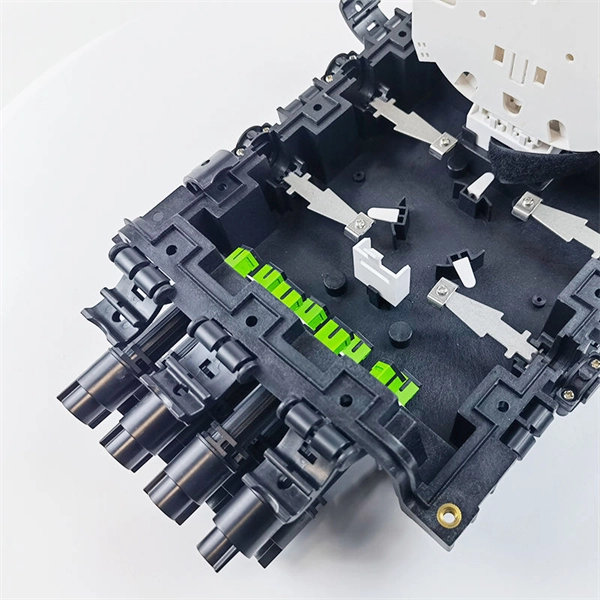
Distribution Box and Selection Guide: Internal Structure, Components
Learn how to choose a distribution box and understand its internal structure, including MCBs, busbars, neutral bars, earth bars, RCDs, RCBOs, SPDs, enclosure ratings, and wiring layout.
How to Wire 120/208/240V High Leg Delta Main Panel
For high leg delta supply, the electric power supply company installs three transformers to provide 120V, 208V and 240V (1 & 3 Phase) supply voltage
Distribution board
In North America, it is common to wire large permanently installed equipment line-to-line. This takes two slots in the panel (two-pole) and gives a voltage of 240 V for split-phase electric power, or 208 V for
240 Volt Wiring Diagram for Residential and
A detailed wiring diagram for 240 volt systems, including step-by-step instructions and safety tips for proper electrical installation.
Can You Put 240V in a Junction Box? Insights from Magnify Electric
Yes, you can put 240V in a junction box, provided you follow proper guidelines for junctions and splices. This means ensuring the junction box is adequately sized and accessible, and
240V Circuit Diagram With Wiring Layout and Components
240V circuit diagram with clear wiring layout, breaker connection, neutral and ground paths, plus examples for outlets, appliances, and common residential electrical setups
THQL Circuit Breaker Panels, 4-Space, 125A Circuit Breaker
RELIABLE&EASY TO INSTALL - This circuit breaker distribution box is designed for a simple installation process, supports single-phase, 120/240V AC systems, and adopts a three wire configuration.
120 / 240 Single Phase 3 Wire Distribution
The distribution system is set to 120/240 Single phase 3 wires and L-L Voltage 240V and L-G Voltage 120. With these settings, it is impossible to assign
Electric power distribution
Closer to the customer, a distribution transformer steps the primary distribution power down to a low-voltage secondary circuit, usually 120/240 V in the US for residential customers. The power comes to
Power Distribution Boxes VFD Control Panel 2-75KW Copper Steel
Key attributes Rated Voltage 230 V, 240 V, 380 V Rated Current 15 A, 16 A Application Electric Power Transmission, Indoor, Industrial, Outdoor IP Level IP66 Type Distribution Box Number of Sockets 6
Plug-On Neutral 240-Volt Breaker Boxes at Lowes
Breaker boxes support everyday electrical systems by helping you organize circuits and manage power distribution efficiently. They''re useful for maintaining structured electrical layouts in residential and
Circuit Breaker & Automatic Transfer Switch | Relay
Products Circuit Breaker & Automatic Transfer Switch Relay, Contactor, Starter & Frequency Inverter Power Equipment and Solar Instruments Indicator & Switch &
Indoor 240-Volt Breaker Boxes at Lowes
Breaker boxes support everyday electrical systems by helping you organize circuits and manage power distribution efficiently. They''re useful for maintaining structured electrical layouts in residential and
How to Wire 120/240V Main Panel – Breaker Box
How to Wire 240V Circuits & Breakers The following tutorial explains how to wire split-phase (240V single-phase) circuit breakers and load points in a residential
TOSUNlux | Electrical Equipment Supplier & Branded Solutions
From circuit breakers and isolating switches to enclosures, panel boards, and switchboards, we offer a full range of safe, reliable solutions for low-voltage electrical distribution applications. TOSUNlux
Electrical Service Types and Voltages
Used primarily in industrial facilities to provide power for three-phase motor loads, and in utility power distribution applications. Nominal service voltages of 240, 400, 480, 600, and higher are typical.
120/240 volts
Get free shipping on qualified 4-Circuit, 120/240 volts Breaker Boxes products or Buy Online Pick Up in Store today in the Electrical Department.
Testing a Circuit Breaker Panel for 240-Volt Electrical Service
Examine your circuit breaker panel to determine if it has the amperage capacity and space required for a new 240-volt circuit or appliance.