DOLPHIN FIBERNetwork equipment for Africa Send a project enquiry
Fiber network equipment / Technical library Optical reference library

Classification of Power Communication Optical Cables

Jump to a section
Source context

AI source overview

Power communication optical cables are designed to transmit data via light, offering high-speed, long-distance communication with specialized structures for durability, environmental protection, and installation flexibility. Core Types of Optical CablesSingle-mode (SM) fiber: Features a narrow core (~9 µm) that allows light to travel long distances with minimal loss, making it ideal for backbone networks, long-haul communications, and optical transport infrastructure. It supports high-speed data transfer over tens to hundreds of kilometers and typically operates at wavelengths of 1310 nm or 1550 nm.

Multimode (MM) fiber: Has a wider core (50–62. 5 µm) suitable for shorter distances, up to 2 km, commonly used in buildings, campuses, and data centers. It is easier to install but has higher attenuation and limited transmission range compared to single-mode fiber.

Structural Features

Core and cladding: The core carries the light signal, while the cladding reflects light back into the core to maintain signal integrity. Both are coated with protective layers, often acrylate polymer or polyimide, to prevent damage. Buffer and sheathing: Fibers are encased in a resin buffer or core tube, with additional protective sheathing layers depending on the environment.

Outdoor cables may use polyethylene (PE) jackets for UV and moisture resistance, while indoor cables often use PVC or LSZH jackets for fire safety. Armored and self-supporting designs: Armored cables include metallic shielding for mechanical protection, suitable for underground, industrial, or underwater installations. Self-supporting cables incorporate tensile elements for aerial deployment without additional support structures.

Performance Characteristics

Attenuation and bandwidth: Signal loss is measured in decibels (dB). Single-mode fibers (OS1/OS2) have low attenuation (0. 3–0.

4 dB/km) and high bandwidth, supporting distances up to 40 km without amplification. Multimode fibers (OM4/OM5) have higher attenuation (up to 3 dB/km) and shorter transmission ranges but can support high data rates over shorter distances. Data transmission: Optical cables transmit data as light pulses generated by lasers or LEDs.

Single-mode fibers are optimized for long-distance, high-speed transmission, while multimode fibers are suitable for shorter, high-density connections. Environmental resilience: Cables are designed to withstand temperature variations, moisture, mechanical stress, and electromagnetic interference. Armored and outdoor-rated cables provide additional protection against harsh conditions.

Installation Considerations

Connector quality and splicing: Minimizing losses at connection points is critical. High-quality fusion or mechanical splices with low reflectance are recommended, especially in high-density or DWDM systems. Bend radius and handling: Proper handling prevents microbends or macrobends that can increase attenuation.

Protective coatings and buffer layers help maintain performance during installation. Color coding and identification: Jackets and connectors are color-coded according to TIA-598D standards to identify fiber type and mode, ensuring correct installation and maintenance.

Summary

Power communication optical cables combine high-speed data transmission, environmental protection, and structural versatility. Choosing the appropriate type—single-mode or multimode, armored or self-supporting—depends on distance, installation environment, and network performance requirements. Proper installation, handling, and connector management are essential to maintain signal integrity and ensure reliable operation in power communication networks.

Research context

Reference summary

Types of cable:, Uses, Benefits, and challengesFrom electrical power cables to communication cables like fiber-optic, coaxial, USB, and telephone cables, e.

From reference to enquiry

Questions for your project

Use these editorial prompts alongside the linked excerpts. They identify items to confirm for your project.

Detailed reading / connection to installation

Fiber infrastructure reference
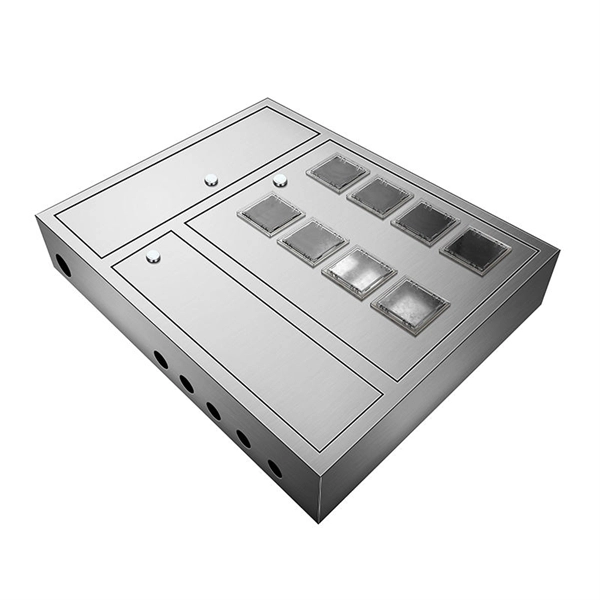
Classification of Power Communication Optical Cables
Equipment illustration / verify against the selected product
Types of cable:, Uses, Benefits, and challenges

From electrical power cables to communication cables like fiber-optic, coaxial, USB, and telephone cables, each type is designed for specific

Classification and Models of H3C Active Optical Cables

Common classifications of H3C AOC active optical cables include: 100G QSFP28 Cable, 40G QSFP+ Cable, 25G SFP28 Cable, 10G SFP+ Cable, etc. Below, Walsun will provide detailed

Power Cable Types and Their Applications: From

From the traditional coaxial cable to the cutting-edge fiber optic cable, each type has its own unique set of benefits and uses. In this post, we will dive into the world of

Handbook Optical fibres, cables and systems

ITU-T has been active in the standardization of optical communications technology and the techniques for its optimal application within networks from the infancy of this industry. However, it is not always

40 Types of Electrical Cables Explained for Modern

Major groups include power cables, control cables, communication cables, coaxial cables, fiber optic cables, and specialty high-temperature or

Fiber-optic cable

The identification scheme used by Corning Cable Systems is based on EIA/TIA-598, "Optical Fiber Cable Color Coding", which defines identification schemes for fibers, buffered fibers, fiber units, and

Communication Cable: A Complete Overview and Guide

Single-mode fiber optic cables have high bandwidth and low attenuation, making them ideal for long-distance communication, while

AOC Vs DAC Vs ACC Vs AEC: Complete Guide To

Understand AOC, DAC, ACC & AEC modules in one guide. Compare features, benefits & best use cases to choose the right cable for your

Types of Power Cables and Cable with Integrated Fibers

Types of Power Cables and Cable with Integrated Fibers Abstract: This chapter addresses practical issues related to integration of the fiber optic element into power cables.

EU Construction Product Regulation for Communications Cables

In 2006, power and communications cables permanently installed in buildings and civil works were accepted as construction products and the CPD Euroclassification for cables (2006/751/EC) was

Outdoor Fiber Cable Types, Classification & Uses

Outdoor Fiber Optic Cables: Classification, Applications, and Technical Comparison Outdoor fiber optic cables are essential for building reliable and high-performance communication

What is an Optical Amplifier? Need, working and classification of

Working of a basic optical amplifier An optical communication system basically contains a transmitter, a receiver and a fiber cable that carries the information from an end to the other. However, an

WebProcure

WebProcure offers best-in-class functionality, reaching end-to-end from requester to procurement buyer to merchant, and all the way back! Designed specifically for the public sector.

IEC Webstore homepage | IEC

IEC e-tech article How do utilities use predictive maintenance? Discover how utilities are using predictive maintenance to anticipate failures, optimize asset

Online Bulk Cable Company | CableWholesale

As a premier online bulk cable company, CableWholesale carries a large inventory of computer cables, USB, HDMI, fiber optic, VGA cables, and more. Shop now!

OPGW Fiber Optical Cable Manufacturer High Quality

Fiber optic ground wire (OPGW) is a fiber optic placed in the ground of overhead high voltage transmission line to form a fiber optic communication network on the

Distributed Acoustic Sensing (DAS) | C-OTDR | AP Sensing

Distributed Acoustic Sensing (DAS) systems detect strain changes and vibrations along optical fibers. This highly sensitive technology is used for monitoring critical infrastructure such as power cables,

WORLD WIDE WEB JOURNAL Home

Internet communications tools Document preparation Computing industry Computing standards, RFCs and guidelines Computer crime Language types Security and privacy Computational complexity and

Related Video Reference

This video was associated with the source search result. Verify technical details against current product documentation and project requirements.

Specify your fiber equipment

Share the fiber interfaces, termination capacity, cable route and evidence required for handover.

Send a project brief