DOLPHIN FIBERNetwork equipment for Africa Send a project enquiry
Fiber network equipment / Technical library Optical reference library

Circuit board with optical module

Jump to a section
Source context

AI source overview

A circuit board optical module is a specialized PCB that integrates electrical and optical layers to enable high-speed electro-optical data transmission in devices like fiber-optic communication systems, 5G networks, and AI data centers.

Overview

An optical module PCB combines traditional electrical circuitry with a photonic layer that transmits data using light, rather than solely relying on copper traces. This hybrid design allows for ultra-high data rates, reduced latency, and lower power consumption compared to conventional PCBs, making them essential for modern high-speed computing and communication systems. Key ComponentsPCBA (Printed Circuit Board Assembly) – Provides the electrical connections and mechanical support for the module.

TOS

A (Transmitting Optical Sub-Assembly) – Converts electrical signals into optical signals for transmission.

ROS

A (Receiving Optical Sub-Assembly) – Converts incoming optical signals back into electrical signals. Housing – Protects the optical and electrical components and ensures precise alignment of optical paths.

Optical PCB Structure

Optical PC

Bs incorporate a planar waveguide layer made of glass or polymer, which guides light signals across the board. This layer is integrated with conventional PCB materials like FR4, allowing electrical and optical circuits to coexist on the same board. Waveguide channels are lithographically patterned, achieving widths typically between 8–62.

5 µm, with signal loss as low as 0. 03 dB/cm when using high-quality fused silica.

Advantages

High Data Rates: Supports speeds exceeding 400 Gbps, suitable for 5G, AI servers, and large-scale data centers. Reduced Latency: Optical transmission reduces signal delay compared to copper-only boards. Lower Power Consumption: Can reduce energy usage by up to 40% relative to conventional PCBs.

Space Efficiency: Optical backplanes reduce cabling requirements, saving significant rack space.

Design and Manufacturing Challenges

Optical module PCBs require extreme precision in mechanical alignment, thermal management, and signal integrity: Signal Integrity: High-frequency signals (112–224 Gbps per lane) demand precise trace design to minimize bit error rates. Thermal Management: Dense components like DSPs and TIAs generate heat that must be dissipated efficiently. Mechanical Precision: Sub-micron alignment is necessary for optical sub-assemblies to ensure proper light coupling.

Material Selection: Coefficient of thermal expansion (CTE) matching and flatness are critical to prevent warping and misalignment.

Applications

Optical module PCBs are widely used in: Optical fiber communication systems for electro-optical signal conversion. 5G base stations and high-speed networking equipment.

AI and HP

C data centers for large-scale model training and inference. Emerging technologies like co-packaged optics (CPO), silicon photonics, and quantum computing. In summary, circuit board optical modules are advanced PCBs that integrate photonic and electrical layers to meet the demands of high-speed, low-latency, and energy-efficient data transmission, with applications spanning telecommunications, AI, and next-generation computing infrastructure.

Research context

Reference summary

Optical PCB: The Future of High-Speed Data TransmissionThis article is a comprehensive overview of the optical PCB, explaining what it is, its structure, a.

From reference to enquiry

Questions for your project

Use these editorial prompts alongside the linked excerpts. They identify items to confirm for your project.

Detailed reading / connection to installation

Fiber infrastructure reference
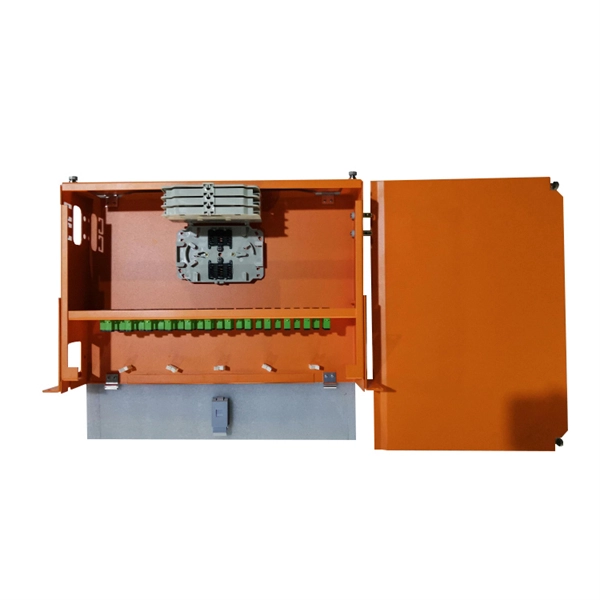
Circuit board with optical module
Equipment illustration / verify against the selected product
Optical PCB: The Future of High-Speed Data Transmission

This article is a comprehensive overview of the optical PCB, explaining what it is, its structure, and its application in high-speed data systems.

What is Optical PCB?

This article delves into the intricacies of PCB optical modules, discussing their applications, technical requirements, distinct characteristics, and key process controls.

Electro-optical Circuit Board (EOCB)

Combining electrical and optical layers in a single circuit board or chip can be a solution to all of these challenges. Fraunhofer IZM produced a first concept of

optical module pcb

Optical module PCBs are mainly used in high-speed communication fields such as optical fiber modules, 5G, and large data centers. Optical modules are assembled from optical chips

Optical Module Printed Circuit Board

Optical module printed circuit boards serve as the pivotal platform for achieving electro-optical signal conversion, occupying a crucial position within high-speed communications and data centre domains.

A Comprehensive Guide to Optical Module PCB

The optical module PCB''s main function is to serve as a platform for connecting the optical module''s parts. Additionally, the PCB offers electrical separation for the

Home | Hamamatsu Photonics

The official website of Hamamatsu Corporation whose mission is to advance science and industry through photonic technologies. Our products include optical sensors and components, cameras, light

Breadboard

A breadboard, solderless breadboard, or protoboard is a construction base used to build semi-permanent prototypes of electronic circuits. Unlike a perfboard or stripboard, breadbo

Semiconductor & System Solutions | Infineon Technologies

Infineon Semiconductor & System Solutions - MCUs, sensors, automotive & power management ICs, memories, USB, Bluetooth, WiFi, LED drivers, radiation h

The Gear Page

Join a vibrant community of musicians and gear enthusiasts discussing instruments, effects, setups, and more on The Gear Page forum.

POLATIS Optical Switch Modules from 16x16 up to 48x48 Ports

POLATIS ® Series 6000 Optical Switch Modules (OSM) are high-performance, fully non-blocking all-optical matrix switch modules with port counts from 16xCC up to 48xCC, offering "any-to-any" port

Electronic Components and Parts Search | DigiKey

Integrated Circuits (ICs) Isolators Kits Labels, Signs, Barriers, Identification Line Protection, Distribution, Backups Magnetics - Transformer, Inductor Components Maker/DIY, Educational Memory - Modules,

EE Times

EE Times offers reliable electronics news, electrical engineering resources, podcasts, and industry events from Award-winning journalists. Visit to learn more.

Co Packaged Optics (CPO) – Scaling with Light for the

Co-Packaged Optics (CPO) has long promised to transform datacenter connectivity, but it has taken a long time for the technology to come to market,

Printed Circuit Boards (PCB) Manufacturer: Manufacturing, Design

TTM offers a wide range of printed circuit board (“PCB”) products including conventional, high-density interconnect ("HDI"), flexible PCBs, rigid-flex PCBs, backplane assemblies, and substrate-like PCBs.

TE Connectivity 7-1393028-2 Module, Control, Output, Digital, Circuit

IACM/OACM IDCM/ODCM Slim Line Input/Output Modules: Slim line .4" (10.16mm) thick package. Foot print same as .6" (15.24mm) thick package. 4,000V rms optical isolation. Color coded by function.

PDF document

PDF document PDF document Read this PDF document online, download the original file, and browse related details on device.report. Additional coding instructions can be found in the Article File chapter

Optical PCB: The Future of High-Speed Data Transmission

Other Uses Apart from its use in telecommunication and high-speed computing systems, the electro-optical PCB plays a vital role in many other

Related Video Reference

This video was associated with the source search result. Verify technical details against current product documentation and project requirements.

Specify your fiber equipment

Share the fiber interfaces, termination capacity, cable route and evidence required for handover.

Send a project brief