
Fiber infrastructure reference
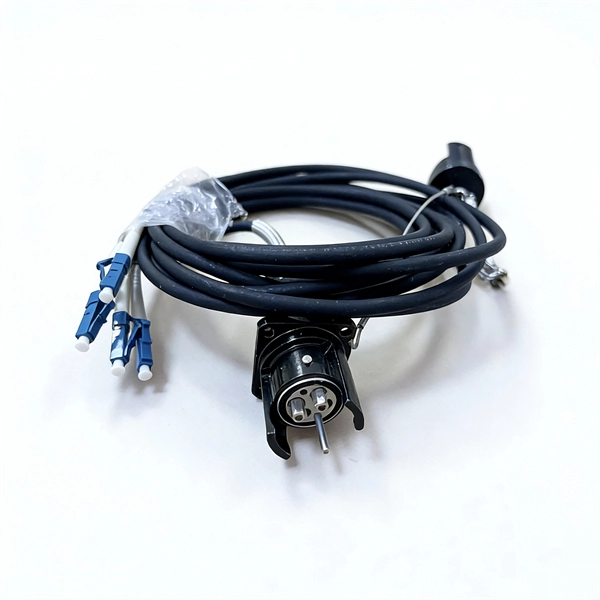
Insertion Loss vs Return Loss in Fiber Patch Cords
Understand insertion loss (IL) and return loss (RL) in fiber optics. Learn testing standards and why they matter for reliable patch cord performance.
Key Quality Indicators and Technical Parameters of Fiber Optic Patch
Every TARLUZ patch cord undergoes 100% insertion loss testing to ensure compliance with stringent performance requirements, supporting high-speed and long-distance optical networks.
Fiber Optic Patch Cord Performance Testing
In the realm of high-performance optical networks, the humble fiber optic patch cord (or jumper) plays a critical but often underappreciated role.
Fibre Patch Cable: The Importance of Insertion and Return Loss
To ensure your network performs at its best, you must select high-quality fibre patch cables and verify their loss specifications. Cable type, connector polish, alignment, and cleanliness all influence
The Ultimate Guide to Indoor Fiber Cable in 2025
Adapters are used to connect two fiber optic patch cords together. They are designed to align the cores of the two fibers precisely, ensuring a low-loss connection.
Custom Indoor Fiber Patch Cables: Everything You Need to Know
Among the crucial components of this infrastructure are fiber optic patch cables, which play a pivotal role in facilitating the transmission of data over vast distances with minimal signal loss.
Do patch panels degrade the overall performance of a FO
Each panel will cause some loss/reflection. Typically you''ll see it modeled as something like 0.75 dB, so a pair of them with introduce 1.5 dB of loss. So, the technical answer is yes -- it does increase loss.
Guidelines On What Loss To Expect When Testing Fiber Optic Cables
Should that fiber be rejected? Well, no, because the uncertainty of the loss budget is probably ~+/-0.5dB, providing a range of 7.5 to 8.5dB loss. The uncertainty of the loss test is probably in the same
Fiber Optic Patch Cables: The Complete 2026 Buyer''s Guide
Excess patch cords coiled behind a cabinet and tucked into cable managers create micro-bend losses when loops are too tight or when cables are compressed by adjacent bundles.
Fiber Optic Cable vs Patch Cord vs Pigtail – Complete Guide
When you build or upgrade a fiber network, the same four words pop up everywhere— fiber optic (bare fiber), pigtail, patch cord, optical cable. They''re related, but they are not
Introduction Of Fiber Optic Patch Cords To Reduce Insertion Loss
I. Lateral Misalignment and Insertion Loss The main factors causing insertion loss of fiber optic connectors include lateral misalignment, end face gap, diameter mismatch and tilt connection.
Insert Loss and Return Loss for Fiber Connectors
Typically, the measure of product quality fiber optic connector optical characteristics of the main indicators Insert loss and Return loss. In addition, the impact of product quality and reliability ferrule
Insertion Loss vs Return Loss in Fiber Patch Cords
Fiber optic patch cords are crucial components in modern data transmission networks, and their performance is largely determined by insertion loss (IL) and return loss (RL). In this article, we
What is insertion loss and return loss of Patchcord?
Conclusion Combining the two important optical indicators of insertion loss and return loss, it can more accurately evaluate the optical fiber transmission efficiency and performance, and judge whether
Effective Patch Cord Management Guide
Effectively patch cord management can reduce overall operational cost of your fiber optic network. Enhancing its reliability and flexibility.
Troubleshooting Fiber Patch Cords: When to Test, When to Replace
Troubleshooting Fiber Patch Cords: When to Test, When to Replace Introduction: Why Patch Cord Integrity Is a Tier-1 Concern Fiber patch cords are the most frequently handled components in any
What are Insertion Loss and Return Loss of Fiber Optic
What are the influencing factors on the Insertion Loss and Reture Loss of Fiber Optic Assemblies? The quality and cleanliness of fiber optic patch cord ''s end
Analysis of Insertion Loss and Attenuation of Fiber Optic
Optical fiber optic patch cord is used as a device for jumping signals and connecting optical paths. Although the smaller the insertion loss is, the smaller the
Related Video Reference
This video was associated with the source search result. Verify technical details against current product documentation and project requirements.