DOLPHIN FIBERNetwork equipment for Africa Send a project enquiry
Fiber network equipment / Technical library Optical reference library

AI Server Fiber Optic Cabling

Jump to a section
Source context

AI source overview

High-density, low-latency fiber optic cabling using multimode OM4/OM5 fibers with MPO/MTP connectors is essential for AI server clusters to support 100G–800G interconnects efficiently.

Key Considerations for AI Fiber Cabling

High Bandwidth and Low Latency: AI servers, especially GPU/TPU clusters, require extremely high data rates, often 100G to 400G per link, with some deployments reaching 800G per switch port. Latency must be minimized to microsecond levels to ensure smooth AI inference and training performance, as even minor delays can disrupt synchronization across thousands of GPUs. Cabling Density: AI workloads demand significantly more fiber connections than traditional CPU-based servers—up to 4–5 times higher.

This is due to the need for extensive inter-server and inter-rack connectivity in cluster architectures, while fewer servers per rack are deployed because of GPU heat output. Fiber Types and Reach: Multimode fibers, particularly OM4, are preferred for intra- and inter-rack connections under 100–150 meters. OM4 supports 100Gbps per lane at 850nm wavelength and is compatible with standard multimode transceivers like SFP+, QSFP28, QSFP56, and QSFP-DD.

OM5 fibers can also be used for future-proofing and wavelength-division multiplexing. Connector Standards: High-density AI data centers rely on MPO/MTP connectors for trunk cables, which can terminate 12, 24, or 32 fibers per connector. These connectors reduce the number of individual connections, simplify management, and support parallel optics for high-speed links.

L

C duplex connectors are used for breakout connections from MPO trunks to individual server or switch ports. Parallel Optics and Active Optical Cables (AOCs): Parallel optics divide high-data-rate signals across multiple fibers, enabling aggregate speeds up to 400G or more over short distances.

AO

Cs integrate transceivers into the cable ends, simplifying deployment but offering less flexibility for upgrades. Structured Cabling and Port Breakout: Port breakout technology allows a single high-speed switch port to split into multiple lower-speed channels, reducing switch chassis count, saving rack space, and lowering cable bulk. For example, an 800G switch port can be broken out into eight 100G links to serve multiple servers efficiently.

Cable Management and Safety: Maintaining minimum bend radius, using radiused cable guides, and deploying plenum-rated jackets in air-handling spaces are critical for performance and fire safety.

Factory-terminated MP

O trunks should be tested before installation to avoid failures in high-density deployments.

Scalability and Future-

Proofing: AI data centers must support modular capacity expansion and multi-rate optical modules to accommodate rapid growth in GPU clusters and evolving AI workloads. Traditional fixed-bandwidth cabling cannot keep pace with iterative speed advancements.

Summary

For A

I server fiber optic cabling, the best practices include: Using OM4/OM5 multimode fiber for short-reach, high-speed connections. Employing MPO/MTP connectors for high-density trunking and LC duplex for breakout. Leveraging parallel optics and port breakout technology to maximize bandwidth and minimize switch count.

Ensuring structured cabling, proper bend radius, and plenum-rated cables for safety and reliability. Designing for scalability and modular upgrades to accommodate rapid AI cluster growth. These strategies collectively ensure high-performance, reliable, and future-ready AI data center networks capable of supporting massive GPU/TPU clusters and ultra-high-speed interconnects.

Research context

Reference summary

A Look at Cabling Best Practices for AI Data CentersWesco's Alan Farrimond discusses the fiber-optic cabling options available for AI servers and explains.

From reference to enquiry

Questions for your project

Use these editorial prompts alongside the linked excerpts. They identify items to confirm for your project.

Detailed reading / connection to installation

Fiber infrastructure reference
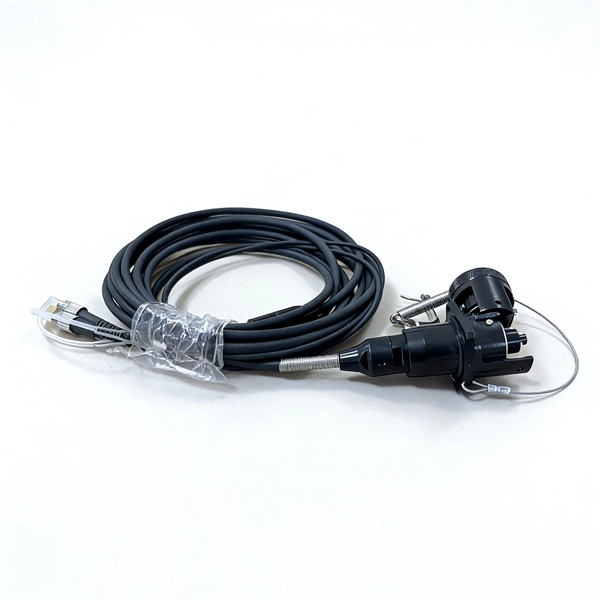
AI Server Fiber Optic Cabling
Equipment illustration / verify against the selected product
A Look at Cabling Best Practices for AI Data Centers

Wesco''s Alan Farrimond discusses the fiber-optic cabling options available for AI servers and explains how parallel optic technology can maximize

Key Cabling Considerations for AI Data Centers

This article examines the cabling challenges unique to AI architecture and outlines best practices for building scalable, high-performance network infrastructures.

Fiber Cabling Strategies for AI Data Centers

In this article, we reveal proven fiber cabling strategies that keep your AI infrastructure agile, reliable, and future-ready. AI data centers must pack GPU/TPU clusters into racks, with links

Optimizing Fiber Cabling Designs in AI Data Centers

This article summarizes the three core cabling requirements for AI data centers, two key optimization strategies, and the high-density MPO/structured solutions that create an efficient, reliable physical

Why AI Data Centers Need a Structured Cabling Strategy

AI is reshaping data center infrastructure, demanding more power, cooling and fiber. Andrew Jimenez discusses why a structured cabling strategy is

Fiber Optic Cabling in AI Data Centers | What Is the Most Advanced St

For this reason, modern AI data centers are equipped with high-quality fiber optic cables. These cables deliver high bandwidth with low latency, thereby ensuring seamless communication

Optimizing Fiber Cabling Designs in AI Data Centers

As the “neural network” connecting tens of thousands of GPU servers, optical fiber cabling directly determines the compute efficiency and scalability of AI data centers.

AI data centers require 36 times more fiber than designs

Rahul Puri, CEO of STL''s Optical Networking Business, told Fierce Network in December that AI-focused data centers need approximately 36 times

Cabling considerations of AI data centers

For decades the danger of malicious artificial intelligence (AI) has been a trope in science fiction. But having the right fiber cabling in data centers will enable organizations to fully benefit from

Optimizing AI Data Centers with Structured Cabling

Optimize AI data centers with structured cabling strategies. The NVIDIA 800G InfiniBand and Ethernet Connectivity Guide helps you take

AI Architecture Cabling Guide: H100 NVIDIA 800G

The H100 NVIDIA 800G InfiniBand and Ethernet Connectivity AI Cabling Guide provides best practices and real-world solutions for high-density fiber networks.

AI Data Center Design Strategies | Fiber Connectivity

This decentralized approach requires low-latency, high-bandwidth fiber optic cabling to support the intensive data processing demands of AI. Long-haul fiber networks are becoming the

Why Fiber Optic Cable Is Best for Data Centers and How to Deploy It

Discover why fiber optic cable is ideal for today''s AI-driven data centers and learn five practical steps to deploy it effectively for high performance and scalability.

5 Essentials for Deploying Structured Cabling for NVIDIA AI Data

AI workload requirements push fiber optic cabling solutions to achieve optimal performance through high-bandwidth optimization. Designers need to understand which cable types

Which Cabling Solution Is Best for Your AI Infrastructure Needs?

Fiber Optic Solutions: The Gold Standard for AI Data Centers Fiber optic technology has emerged as the clear leader for AI infrastructure cabling, offering unmatched bandwidth, distance capabilities,

Why Optical Fiber is the Best Choice for AI Data Centers

Fiber optic cables consume less power than copper cables, which is crucial for AI data centers. High-power GPU server clusters are already the primary energy consumers in data centers.

A Look at Cabling Best Practices for AI Data Centers

Additionally, VCSEL-based optics are typically less expensive than single-mode fiber transceivers. Exploring the Benefits of Parallel Optic Technology Parallel optic technology offers a great option for

Optical fiber makes artificial intelligence possible

Discover how Corning''s optical fiber boosts AI data center capacity, connectivity, and infrastructure to power the future of generative AI networks.

Related Video Reference

This video was associated with the source search result. Verify technical details against current product documentation and project requirements.

Specify your fiber equipment

Share the fiber interfaces, termination capacity, cable route and evidence required for handover.

Send a project brief