DOLPHIN FIBERNetwork equipment for Africa Send a project enquiry
Fiber network equipment / Technical library Optical reference library

380V Hybrid Energy System for Supercomputing Center

Jump to a section
Source context

AI source overview

A 380V hybrid energy system combines high-voltage DC distribution with renewable and grid power sources to optimize efficiency, reliability, and sustainability in supercomputing centers. Overview of 380V DC ArchitectureModern data centers, especially those supporting AI and supercomputing workloads, are increasingly adopting 380V DC power distribution. This architecture reduces the number of AC-to-DC conversion stages, minimizing energy losses and improving overall system efficiency.

By delivering power directly in DC form, 380V systems simplify the power chain, reduce cabling requirements, and allow higher power density per rack, which is critical for high-performance computing environments.

Hybrid Energy Integration

A hybrid energy system integrates multiple power sources, including the electric grid, on-site generation (solar, wind, or natural gas), energy storage, and potentially nuclear or hydrogen-based sources. For supercomputing centers, this approach allows: Load balancing between intermittent renewable sources and stable grid power. Cost optimization by switching between cheaper and more expensive energy sources depending on availability and pricing.

Carbon footprint reduction by prioritizing low-carbon or renewable energy sources. Hybrid systems often include battery energy storage or long-duration energy storage (LDES) to provide dispatchable power during peak demand or grid outages, ensuring uninterrupted operation for critical AI workloads.

Efficiency and Reliability Benefits

Reduced conversion losses: Direct 380V DC distribution eliminates multiple AC-DC-AC conversions, improving overall energy efficiency. Enhanced power quality: DC distribution provides stable voltage with fewer harmonics, reducing the risk of equipment damage. Scalability: Modular 380V DC systems allow incremental capacity expansion without major infrastructure changes.

Integration with SiC technology: Silicon Carbide (SiC) semiconductors in DC-DC converters and UPS systems further improve efficiency, thermal performance, and reliability in high-power AI data centers.

Design Considerations

When designing a 380V hybrid energy system for a supercomputing center, key factors include: Load profile analysis: Understanding peak and average power demands, which can exceed 500 MW for hyperscale AI centers. Renewable resource availability: Solar, wind, or CSP integration must match local conditions and operational requirements. Energy storage sizing: Batteries or thermal storage must provide sufficient backup for critical loads.

Regulatory and safety compliance: Systems must adhere to standards such as ANSI/BICSI 002-2011 and EMerge Alliance Data/Telecom Center Standard. Cost vs sustainability trade-offs: Hybrid systems can reduce carbon emissions significantly but may involve higher upfront capital costs.

Practical Implementation

A typical 380V hybrid energy setup for a supercomputing center might include: Grid connection for baseline power and redundancy. On-site renewable generation (solar PV, CSP, or wind) feeding directly into the DC bus.

Battery or LDE

S storage for peak shaving and backup. SiC-based DC-DC converters to supply server racks at required voltages. Energy management software to optimize source switching, load distribution, and cost-efficiency.

By combining these elements, supercomputing centers can achieve high reliability, lower operational costs, and reduced carbon footprint, while supporting the extreme power demands of AI and HPC workloads.

Research context

Reference summary

White paper: Optimization of data center power systemsThrough real-world modeling and a detailed case study, the paper shows how hybrid energy systems can.

From reference to enquiry

Questions for your project

Use these editorial prompts alongside the linked excerpts. They identify items to confirm for your project.

Detailed reading / connection to installation

Fiber infrastructure reference
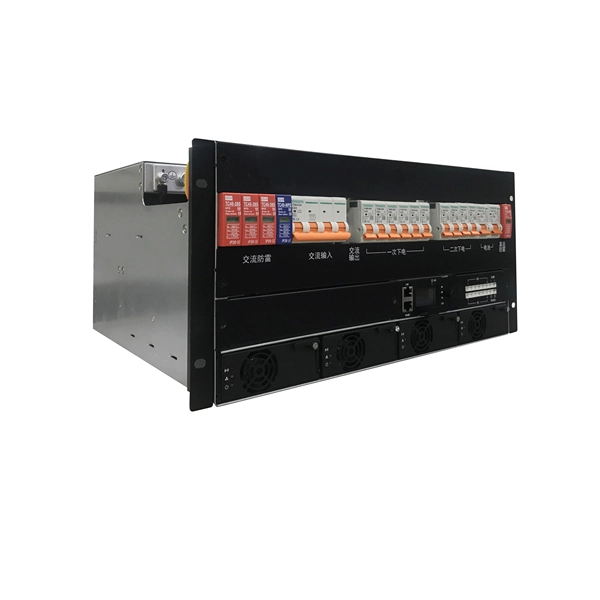
380V Hybrid Energy System for Supercomputing Center
Equipment illustration / verify against the selected product
White paper: Optimization of data center power systems

Through real-world modeling and a detailed case study, the paper shows how hybrid energy systems can reduce emissions and optimize

Europe Unveils a Record 35 New NVIDIA AI Supercomputers

The systems represent Europe''s largest one-year expansion of supercomputers, spanning national supercomputing centers, AI factories and academic research institutions.

Numerical simulation of a hybrid energy system proposed for low

Data centers (DC) are the typical distributed large-size energy consumers, and the application of renewable energy and energy storage is a promising solution for data center

380 Vdc Architectures for the Modern Data Center

This paper presents an overview of the case for the application of 380 Vdc as a vehicle for optimization and simplification of the critical electrical system in the modern data center.

Structure and Implementation of a Hybrid 48V/380V DC UPS for IT

The results show that the 380V DC system has higher efficiency, while the 48V DC system has higher system reliability. Based on this study, a new DC UPS architecture, which combines the advantages

Exploring Highly Dependable and Efficient Datacenter Power System

In this paper, we propose Hybrid and Hierarchical Energy Buffering (HHEB), a novel heterogeneous and adaptive scheme that could enable various energy storage devices (ESDs) to be

Optimization of power supply and surplus energy utilization in data

This study proposes a hybrid energy system integrating wind power, PV power, a diesel generator, and hydrogen storage system to enhance data center power supply.

Power Architecture Evolution in Data Centers

This approach can be leveraged by the data center OEMs and Hyperscalers to partner with semiconductor suppliers like Renesas toward the scope of defining the next generation''s improved

Converged Power

With Eltek''s (a Delta Group company) Converged Power Solutions, the next generation power solution for data centers is here. It offers unmatched availability, scalability and compactness compared to

Structure and Implementation of a Hybrid 48V/380V DC UPS for IT

We present a quantitative analysis of the benefits of the 380 VDC power distribution system compared to the current -48-VDC power supply system.

380V DC Power: Shaping the Future of Data Center Energy Efficiency

380V DC power systems are the future of data center power distribution, forever changing the data center landscape as we migrate toward a cleaner, more energy efficient and sustainable

Hierarchical protection architecture for 380V DC data center

Hierarchical protection architecture for 380V DC data center application Abstract: The DC distribution system is becoming an appealing spot due to its higher energy efficiency in recent years. Nowadays,

283-20-fernandez

The present work will focus the study in the energy Fig 1. Technical room: Auxiliary industrial systems efficiency in a Supercomputing Centre (SCAYLE), through the description of solutions used currently,

Designing an Energy-Efficient HPC Supercomputing Center

Thermosyphon Cooler Hybrid System for Water Savings in an Energy-Efficient HPC Data Center, Results from 24 Months and Impact on Water Usage Effectiveness, David Sickinger, et. al.,

Presentation

Stored Energy System (S.E.S.) — The industry''s first high rate discharge, UL-listed, lithium battery solution for uninterruptible power systems delivers safe power on demand to ensure long,

380 VDC Input Supplies Enable Data Centers to Use HVDC Power

Data centers are striving to reduce their power consumption, but they are still trying to decide whether to use AC or DC power distribution, a debate that has gone on for several...

Can Hybrid Energy Systems Solve the Data Center Power Problem?

As data center demand grows, hybrid energy systems are emerging as a flexible solution, combining multiple power sources to meet increasing needs and sustainability goals.

Optimization of power supply and surplus energy utilization in data

The rapid growth of data storage, processing, cloud services, and other digital applications has sharply increased data center power use. As the global energy transition speeds up, sustainable

Specify your fiber equipment

Share the fiber interfaces, termination capacity, cable route and evidence required for handover.

Send a project brief